
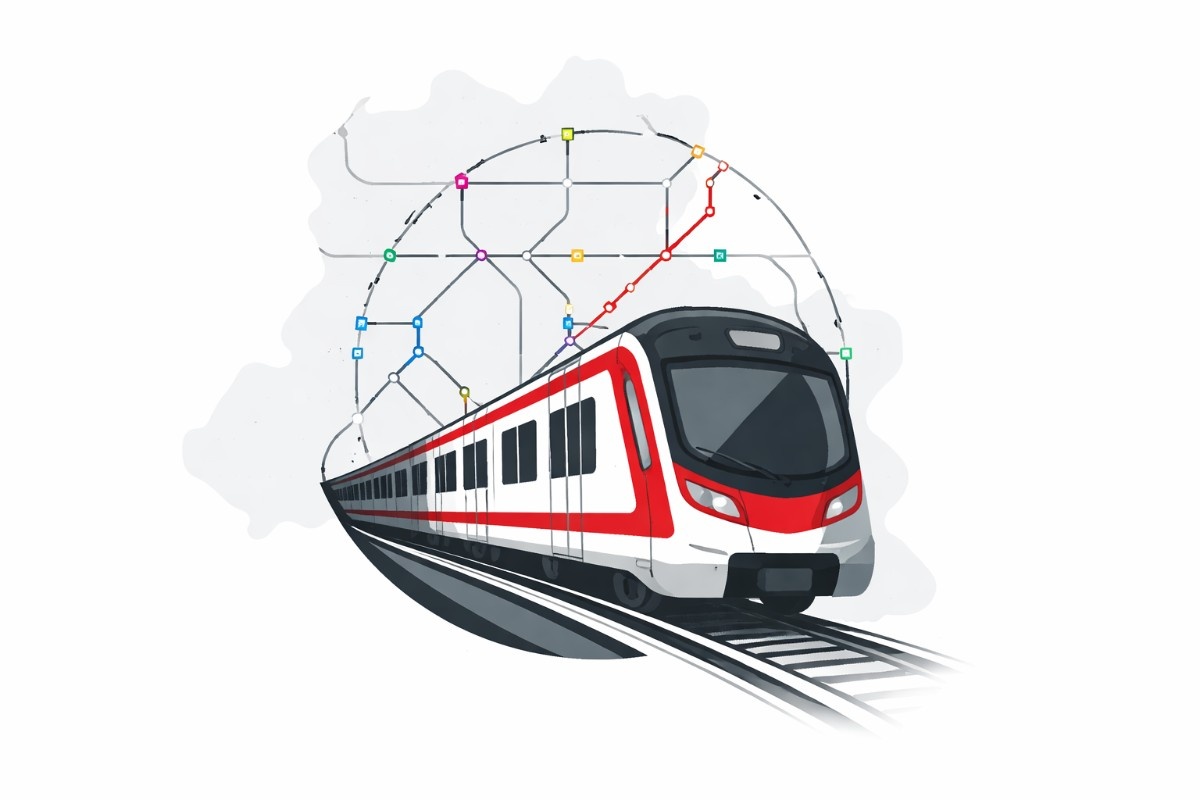
The inauguration of Delhi’s first fully operational ring-shaped metro corridor marks a major milestone in the evolution of urban transport in India’s capital. The project, completed as part of the expansion of the Delhi Metro network, is expected to significantly improve connectivity across the city while easing pressure on some of the busiest interchange stations.
The ring corridor has been created through the completion of the Pink Line loop of the Delhi Metro. With the final stretch linking the northern and eastern parts of the city now operational, trains can travel in a circular route connecting multiple districts without requiring commuters to pass through central metro hubs. The development represents a structural shift in how the metro system functions, moving from a primarily radial network toward a more interconnected grid.
The newly opened section connects Majlis Park in North Delhi with Maujpur–Babarpur in East Delhi. The corridor runs through several densely populated neighbourhoods, including Burari, Jharoda Majra, Jagatpur Village, Soorghat, Khajuri Khas, Bhajanpura and Yamuna Vihar. The stretch includes elevated tracks and complex engineering features such as a bridge across the Yamuna River and sections built along double-decker viaducts.
With the completion of this segment, the Pink Line now forms a circular route of more than seventy kilometres, effectively acting as a ring around a large part of the capital. This allows passengers to move between outer districts without travelling through central stations such as Rajiv Chowk or Kashmere Gate, which traditionally handle some of the highest passenger volumes in the system.
Urban mobility experts say ring corridors are considered an efficient way to distribute passenger traffic across a metro network. Instead of forcing commuters to converge toward the city centre before changing lines, ring routes allow travellers to move laterally across different parts of the city. This design reduces congestion at major interchange points and improves overall network efficiency.
For daily commuters, the impact could be substantial. Residents in areas such as North Delhi and East Delhi will now be able to reach key employment and commercial hubs with fewer transfers and shorter travel times. The improved connectivity also makes it easier to access other metro lines intersecting the ring corridor, strengthening the integration of the broader transport system.
The inauguration of the ring corridor was part of a broader set of infrastructure projects aimed at expanding urban mobility in the National Capital Region. Along with the completion of the Pink Line loop, additional metro extensions and transport infrastructure initiatives have been launched to enhance connectivity between residential suburbs, business districts and transport hubs.
Officials say the project is also expected to play an important role in addressing long-standing challenges related to traffic congestion and pollution in Delhi. The capital has one of the highest vehicle densities in the country, and authorities have been promoting public transport as a key strategy to reduce reliance on private vehicles. By expanding metro coverage into more neighbourhoods and improving route efficiency, the ring corridor could encourage more commuters to shift to mass transit.
Delhi Metro Rail Corporation, which operates the network, has continued to expand the system through multiple development phases over the past two decades. The metro has become one of the largest urban rail networks in the world, serving millions of passengers each day. With the addition of the completed ring corridor and other recent extensions, the network now stretches across hundreds of kilometres and connects dozens of residential and commercial centres across the city.
Transport planners often point to global cities such as London, Moscow and Beijing, where circular metro routes play a central role in managing large passenger volumes. The introduction of a similar structure in Delhi reflects the city’s growing scale and the increasing complexity of its transport needs.
As Delhi continues to expand, experts believe that integrated and high-capacity public transport will be essential to maintaining mobility and supporting economic activity. The launch of the Ring Metro corridor represents an important step in that direction, offering faster travel, improved connectivity and a more balanced metro network for one of the world’s fastest-growing megacities.
Disclaimer: The information presented in this article is intended for general informational purposes only. While every effort is made to ensure accuracy, completeness, and timeliness, data such as prices, market figures, government notifications, weather updates, holiday announcements, and public advisories are subject to change and may vary based on location and official revisions. Readers are strongly encouraged to verify details from relevant official sources before making financial, investment, career, travel, or personal decisions. This publication does not provide financial, investment, legal, or professional advice and shall not be held liable for any losses, damages, or actions taken in reliance on the information provided.
Edited by Madhusudhan Reddy
Last Updated on: Monday, March 9, 2026 10:38 am by News Proton Team | Published by: News Proton Team on Monday, March 9, 2026 10:38 am | News Categories: India