
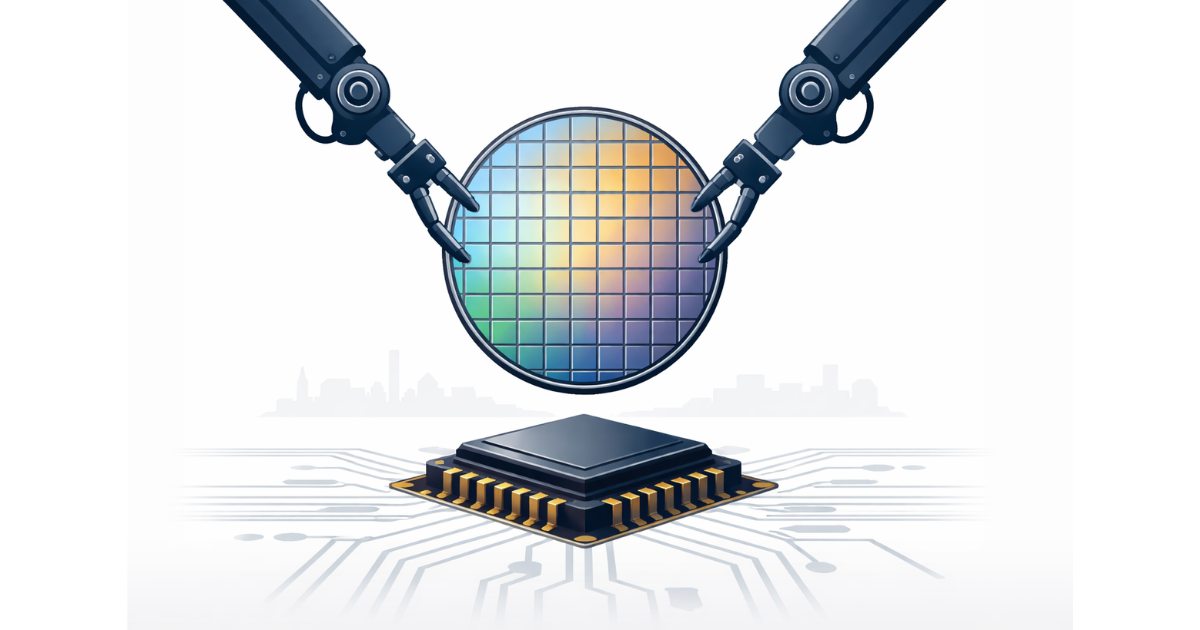
India’s long-articulated ambition to build a domestic semiconductor manufacturing base is entering a decisive new phase. With the government reaffirming and expanding its commitment under the India Semiconductor Mission, policymakers are shifting from foundational incentives to deeper ecosystem development — a move that industry experts say is critical if India is to emerge as a credible player in the global chip supply chain.
Semiconductors form the backbone of modern electronics, powering everything from smartphones and automobiles to telecommunications networks, medical devices and advanced defence systems. Globally, the semiconductor market is projected to approach the one-trillion-dollar mark by the end of the decade, driven by artificial intelligence, electric mobility, 5G expansion and industrial automation. For India, where electronics consumption is rising rapidly and digital infrastructure continues to expand, reducing dependence on imported chips has become both an economic and strategic priority.
The India Semiconductor Mission was originally launched in 2021 with a financial outlay of ₹76,000 crore to support semiconductor fabrication plants, display manufacturing units and semiconductor packaging facilities. The aim was to catalyse private investment and create an enabling environment for high-technology manufacturing. Since then, several large-scale projects — including fabrication and advanced packaging facilities — have received government approval, representing combined investments running into lakhs of crores of rupees across multiple states.
The latest policy update signals a more nuanced approach. While earlier efforts focused on attracting fabrication plants and assembly units, the new phase places greater emphasis on strengthening upstream capabilities such as semiconductor materials, manufacturing equipment and domestic intellectual property. Officials have indicated that developing indigenous know-how and supply chain depth is essential to reduce long-term vulnerability to global disruptions.
The renewed focus reflects lessons learned from the global chip shortages during the pandemic, when supply bottlenecks affected industries ranging from automobiles to consumer electronics. For India, which imports a significant share of its semiconductor requirements, the disruptions highlighted the risks of overdependence on external suppliers concentrated in a few geographies.
Industry developments suggest that policy support is beginning to translate into tangible progress. Semiconductor assembly and testing facilities have begun ramping up operations, marking a shift from announcement to execution. International technology firms have also expanded their design and engineering footprints in India, leveraging the country’s large pool of chip design talent. India is already recognized as a major hub for semiconductor design services, with thousands of engineers working for global firms in cities such as Bengaluru, Hyderabad and Noida.
The government’s updated strategy also underscores the importance of skill development. Semiconductor manufacturing is highly specialized, requiring expertise in materials science, chemical engineering, precision manufacturing and advanced electronics. Analysts have cautioned that India must significantly expand its talent pipeline to meet future demand. Without sustained investment in training institutions, research partnerships and industry-academia collaboration, workforce constraints could slow project execution.
At the same time, global competition in semiconductor manufacturing is intensifying. The United States, European Union, Japan and China have all rolled out multi-billion-dollar support packages to strengthen their domestic chip industries. In this environment, India’s policy stability and long-term commitment will be closely watched by investors evaluating capital-intensive fabrication projects that often require years to become operational and profitable.
Strategically, India’s semiconductor push aligns with its broader push for self-reliance in critical technologies while remaining integrated into global supply chains. Rather than pursuing isolation, policymakers appear to be encouraging partnerships with established international players while building domestic capabilities in parallel. This hybrid approach aims to position India as both a manufacturing destination and a trusted partner in a diversified global semiconductor ecosystem.
Economists note that the benefits of a successful semiconductor industry extend beyond chip production. The sector can catalyse growth in electronics manufacturing, defence technology, automotive electronics and emerging fields such as artificial intelligence and renewable energy systems. It can also generate high-skilled employment and attract advanced research and development investment.
However, the road ahead remains complex. Semiconductor fabrication requires substantial capital expenditure, reliable power and water supply, world-class logistics and consistent regulatory frameworks. Ensuring that approved projects move from policy announcements to full commercial production will be a key test of India’s industrial execution capacity.
The latest policy reinforcement suggests that the government recognizes both the opportunity and the scale of the challenge. By expanding support beyond fabrication incentives to include ecosystem components such as materials, equipment and research, India is attempting to build a more resilient and competitive semiconductor foundation.
Whether this momentum can be sustained over the long term will determine how prominently India features in the next chapter of the global semiconductor story. For now, the renewed policy push marks a significant step toward transforming a strategic ambition into industrial reality.
Add newsproton.com as preferred source on google – Click here
Disclaimer: The information presented in this article is intended for general informational purposes only. While every effort is made to ensure accuracy, completeness, and timeliness, data such as prices, market figures, government notifications, weather updates, holiday announcements, and public advisories are subject to change and may vary based on location and official revisions. Readers are strongly encouraged to verify details from relevant official sources before making financial, investment, career, travel, or personal decisions. This publication does not provide financial, investment, legal, or professional advice and shall not be held liable for any losses, damages, or actions taken in reliance on the information provided.
Last Updated on: Thursday, February 19, 2026 11:12 am by News Proton Team | Published by: News Proton Team on Thursday, February 19, 2026 11:12 am | News Categories: Technology