
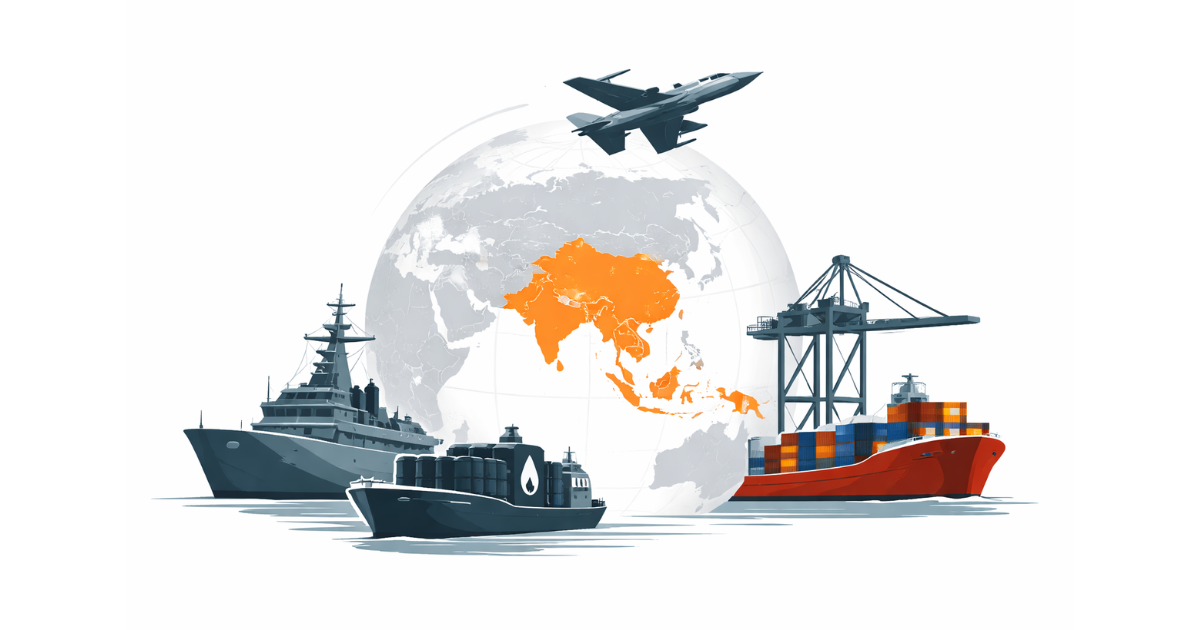
A volatile mix of West Asian military signalling, fast-moving trade diplomacy and renewed instability in parts of South Asia is forcing New Delhi to keep a close watch on multiple fronts at the same time. For India, the stakes are not abstract. Developments in the Gulf can directly influence fuel prices and shipping routes, trade agreements can reshape export prospects, and security turbulence in the neighbourhood can alter strategic calculations. Together, these shifts are shaping India’s economic and geopolitical outlook in early 2026.
The most immediate pressure point lies in tensions between the United States and Iran. Periodic military drills and political escalation have again drawn attention to the Strait of Hormuz, the narrow maritime corridor through which a significant share of global oil shipments passes. Even brief disruptions or heightened security advisories in the region can push up freight and insurance costs, increase volatility in crude oil markets and affect global supply chains. For India, which imports the majority of its crude oil requirements, any sustained instability in the Gulf can translate into higher input costs for refineries, elevated transport expenses and renewed inflationary pressure.
Beyond Hormuz, continued security concerns in the Red Sea have added another layer of uncertainty to global trade flows. Attacks on commercial vessels over the past year have already forced some shipping companies to reroute traffic around the Cape of Good Hope, increasing transit times between Asia and Europe. For Indian exporters of engineering goods, textiles and pharmaceuticals, longer shipping routes mean higher logistics costs and potential delays. For import-dependent sectors, including electronics and manufacturing, it can result in costlier components and supply bottlenecks.
At the same time, diplomacy continues alongside the tensions. Efforts to revive dialogue over Iran’s nuclear programme have resumed intermittently, even as both sides maintain firm public positions. For India, the dual-track reality of negotiations under the shadow of military posturing requires careful energy planning and diversification strategies. The broader lesson for policymakers is that volatility may persist even without open conflict.
While security risks intensify in some regions, trade diplomacy is advancing in others. India’s recently concluded trade agreement with the European Union marks a significant development in its external economic strategy. The pact is expected to reduce tariffs across a wide range of goods and deepen economic engagement between the two markets. For Indian exporters, especially in manufacturing, textiles and certain high-value sectors, improved market access to Europe could open substantial opportunities. However, trade agreements also bring stricter compliance requirements related to standards, traceability and environmental norms. Indian businesses, particularly small and medium enterprises, may need to invest in upgrading processes to fully benefit from the expanded access.
Globally, major economies are also recalibrating their trade relationships across the Indo-Pacific. New agreements and investment commitments signal an increasingly competitive environment in which supply chains are being reshaped around strategic partnerships. For India, the challenge is twofold: to leverage new trade openings while ensuring domestic industries remain competitive amid evolving global standards and tariff structures.
Closer to home, security developments in Pakistan have drawn attention once again to regional stability. Recent militant attacks in Balochistan and areas near the Afghan border have highlighted the persistence of internal security challenges in Pakistan. Although such incidents occur within Pakistan’s territory, instability there can have wider implications for regional security dynamics. Heightened tensions or miscalculations in times of internal stress have historically complicated bilateral relations. India’s security establishment must therefore factor in the possibility of spillover effects, particularly during periods of political sensitivity.
Simultaneously, India continues to manage its northern frontier with China, where infrastructure development and military preparedness remain central to strategic planning. The reality for New Delhi is that it must remain prepared for a complex security environment across both its western and northern borders. Any escalation in one theatre can constrain diplomatic and military options in another.
The convergence of these trends presents India with a layered challenge. Rising geopolitical risks in West Asia threaten energy stability and trade routes. Accelerating trade deals demand rapid domestic adaptation to new compliance frameworks. Regional security turbulence calls for sustained vigilance and preparedness. Policymakers must balance growth priorities with strategic caution, ensuring that short-term shocks do not derail long-term economic ambitions.
India’s relative strength lies in diversification and resilience. Over recent years, it has broadened its crude sourcing mix, strengthened strategic partnerships across continents and invested in border infrastructure. Yet global uncertainty is unlikely to ease quickly. Energy markets remain sensitive to geopolitical signals, global trade remains subject to political recalibration, and regional security dynamics remain fluid.
In the weeks ahead, the trajectory of Gulf maritime security, the pace of implementation of new trade agreements and the stability of India’s immediate neighbourhood will be critical indicators. For businesses, investors and policymakers alike, the need is for agile decision-making backed by realistic risk assessment.
As 2026 unfolds, India finds itself at the intersection of global power competition, shifting trade alliances and regional security complexity. The test will not only be how effectively it responds to immediate shocks, but how strategically it prepares for a world in which economic opportunity and geopolitical risk increasingly move together.
Also read : https://newsproton.com/kartik-aaryans-naagzilla-shoot-at-india-gate-goes-viral-fans-react-to-first-look/
Add newsproton.com as preferred source on google – Click here
Disclaimer: The information presented in this article is intended for general informational purposes only. While every effort is made to ensure accuracy, completeness, and timeliness, data such as prices, market figures, government notifications, weather updates, holiday announcements, and public advisories are subject to change and may vary based on location and official revisions. Readers are strongly encouraged to verify details from relevant official sources before making financial, investment, career, travel, or personal decisions. This publication does not provide financial, investment, legal, or professional advice and shall not be held liable for any losses, damages, or actions taken in reliance on the information provided.
Last Updated on: Thursday, February 19, 2026 10:40 am by News Proton Team | Published by: News Proton Team on Thursday, February 19, 2026 10:40 am | News Categories: General