
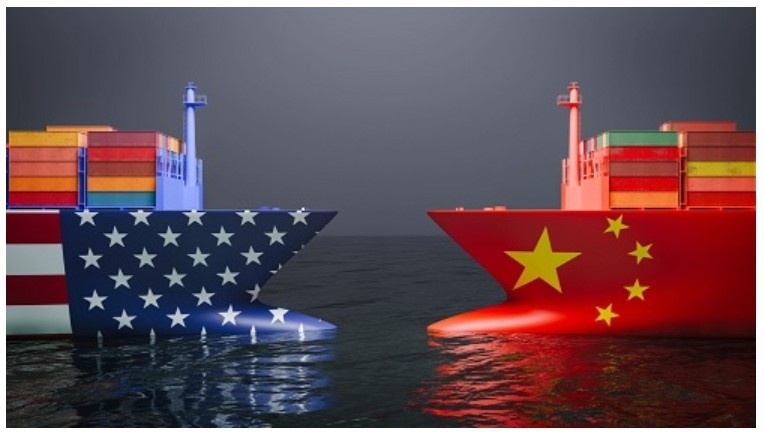
The United States has intensified pressure on Uruguay to reduce its trade relationship with China, placing the small South American nation in a difficult position as global geopolitical tensions continue to rise. Uruguay’s Economy and Finance Minister Gabriel Oddone revealed during a private meeting with business leaders in Montevideo on March 28 that Washington has been repeatedly urging the country to distance itself from Beijing, warning that failure to do so could strain ties with the current US administration.
Oddone described the pressure as persistent and unusually direct, noting that requests are being conveyed through multiple diplomatic and economic channels. His remarks highlight how the growing rivalry between the United States and China is increasingly influencing the policy choices of smaller economies that depend on both powers for trade and investment.
Uruguay’s economic ties with China have deepened over the past decade, with Beijing remaining its largest trading partner for the last 14 years. Around 26 percent of Uruguay’s exports are sent to China, including key commodities such as beef, soybeans, and cellulose. This strong dependence makes any abrupt shift in trade policy potentially risky, especially for export-driven sectors that rely heavily on Chinese demand.
The development comes at a time when Uruguay’s economy is already facing slower growth. The country recorded GDP growth of 1.8 percent last year, below the government’s target of 2.6 percent, and forecasts for 2026 have been revised down to around 1.6 percent. These economic challenges limit the government’s ability to make significant changes to its trade strategy without risking further slowdown.
Despite external pressure, Oddone indicated that Uruguay will not resort to currency devaluation to boost competitiveness. Instead, the government plans to focus on structural reforms, including improving efficiency, reducing costs, and streamlining foreign trade processes. This approach aims to strengthen the economy internally while maintaining stable trade relations.
The situation reflects a broader global trend in which smaller nations are increasingly caught between competing geopolitical interests. As tensions between the United States and China deepen, countries like Uruguay are being forced to balance economic priorities with diplomatic considerations, often under significant external pressure.
For businesses and exporters in Uruguay, the evolving scenario could create uncertainty, particularly for industries heavily reliant on Chinese markets. At the same time, diplomatic relations with the United States remain important, adding another layer of complexity to policy decisions.
Looking ahead, Uruguay appears determined to maintain its existing trade partnerships while cautiously navigating geopolitical pressures. However, with global rivalries continuing to shape economic relations, the country may face ongoing challenges in preserving both its economic stability and strategic autonomy.
Input & Images : Hindusthan Samachar
Edited by Madhusudhan Reddy
Last Updated on: Saturday, March 28, 2026 8:23 pm by Madhusudhan Reddy | Published by: Madhusudhan Reddy on Saturday, March 28, 2026 8:23 pm | News Categories: Trending