
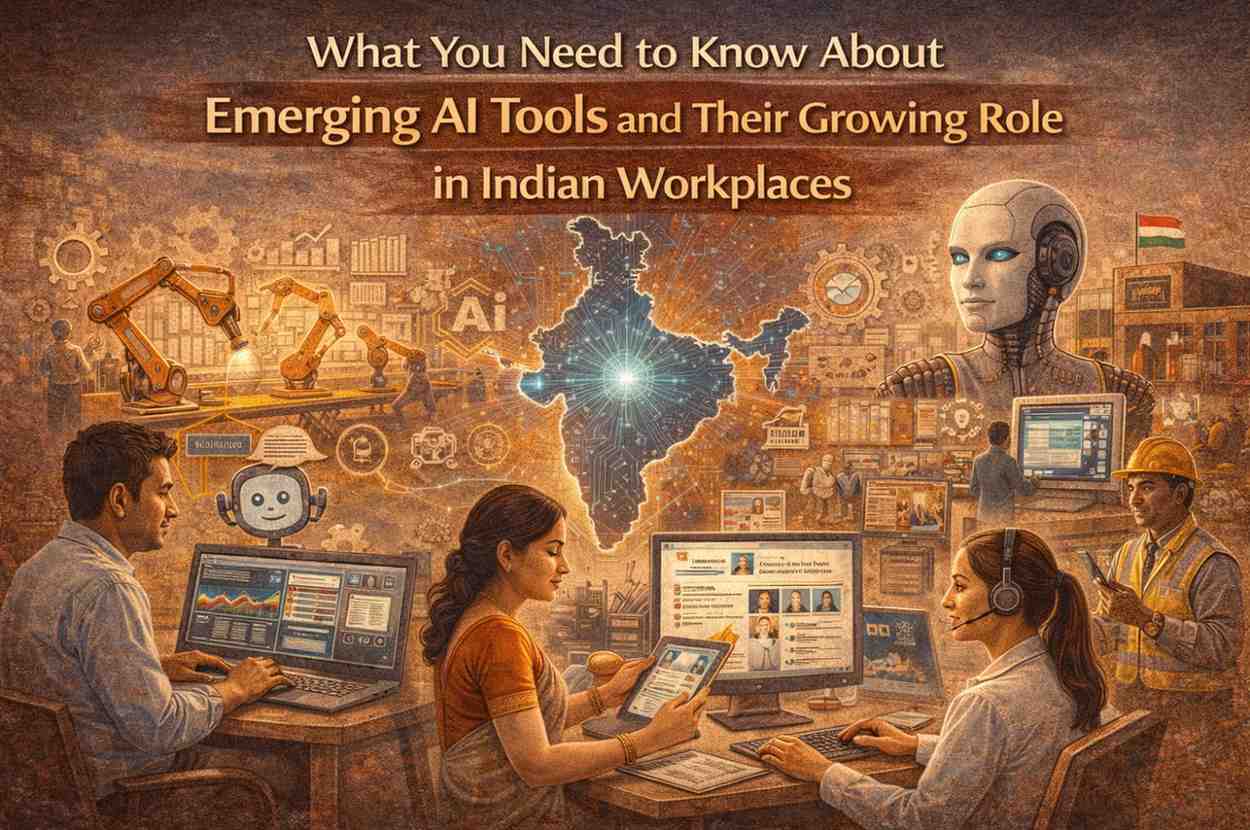
Artificial intelligence is no longer a futuristic concept in India’s workplaces. From corporate offices and factories to startups and public sector organisations, AI-powered tools are increasingly shaping how work is done, decisions are made, and productivity is measured. As businesses adapt to global competition and rapid technological change, understanding the role of emerging AI tools has become essential for employers and employees alike.
Why AI Adoption Is Accelerating in Indian Workplaces
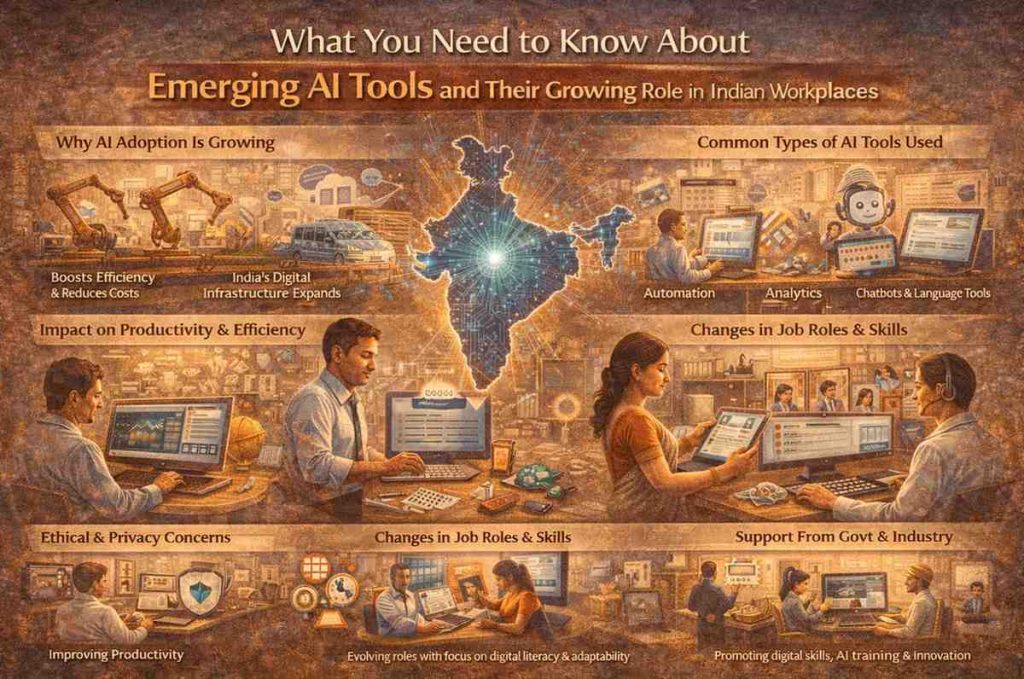
Several factors are driving the rapid adoption of AI across Indian industries. Businesses are under pressure to improve efficiency, reduce costs, and deliver faster, more personalised services. At the same time, India’s growing digital infrastructure, expanding data availability, and large pool of tech talent have created favourable conditions for AI deployment.
The shift toward remote and hybrid work has also accelerated the use of AI tools for collaboration, monitoring, and workflow automation. For many organisations, AI is now seen not just as a technology upgrade but as a strategic necessity.
Common Types of AI Tools Being Used
AI tools in Indian workplaces span a wide range of functions. Automation software is handling repetitive tasks such as data entry, invoice processing, and scheduling. Advanced analytics platforms help businesses make sense of large datasets, enabling better forecasting and decision-making.
Natural language processing tools are being used for chatbots, customer support, document analysis, and internal knowledge management. In creative and marketing roles, generative AI tools assist with content creation, design drafts, and campaign planning, reducing turnaround times while enhancing output quality.
Impact on Productivity and Efficiency
One of the most visible effects of AI adoption is improved productivity. By automating routine tasks, employees can focus on higher-value work that requires judgment, creativity, and problem-solving. This shift has the potential to increase job satisfaction while allowing organisations to do more with existing resources.
AI-driven insights also improve efficiency at the management level. Leaders can track performance trends, identify bottlenecks, and allocate resources more effectively. Over time, these efficiencies can translate into better competitiveness and growth.
Changes in Job Roles and Skill Requirements
As AI tools become more integrated into daily work, job roles are evolving. While fears of job losses persist, the reality in many Indian workplaces is a transformation rather than elimination of roles. Routine tasks are being automated, but new responsibilities are emerging that require human oversight, interpretation, and creativity.
Employees are increasingly expected to develop skills in working alongside AI tools. Digital literacy, data interpretation, and adaptability are becoming essential across sectors, not just in technology-focused roles. Continuous learning is now a key requirement for career growth.
AI in Human Resources and Talent Management
Human resources departments are among the early adopters of AI in Indian organisations. AI tools are used to screen resumes, analyse candidate suitability, and reduce bias in recruitment processes. Performance management systems use data-driven insights to support fairer evaluations and personalised development plans.
Employee engagement tools powered by AI help organisations understand workforce sentiment and address concerns proactively. While these systems offer efficiency, they also raise important questions about transparency and data privacy.
Ethical and Privacy Considerations
The growing use of AI in workplaces has brought ethical and privacy issues into focus. AI systems often rely on large volumes of employee and customer data, raising concerns about surveillance, consent, and misuse of information.
Ensuring that AI tools are used responsibly is becoming a key priority for organisations. Clear policies, transparent communication, and adherence to data protection norms are essential to maintain trust among employees and customers.
Challenges for Small Businesses and Traditional Sectors
While large corporations and tech-driven startups are quick to adopt AI, smaller businesses and traditional sectors face challenges. High initial costs, lack of technical expertise, and limited awareness can slow adoption.
However, the increasing availability of affordable, cloud-based AI solutions is gradually lowering these barriers. As tools become more user-friendly, even small enterprises are beginning to explore AI for accounting, customer engagement, and operations management.
Government and Industry Support for AI Adoption
The broader ecosystem plays an important role in shaping AI adoption. Government initiatives promoting digital transformation, skill development, and innovation provide a supportive environment for businesses. Industry bodies and educational institutions are also expanding AI-focused training programmes to prepare the workforce for future demands.
Collaboration between the public and private sectors is seen as crucial to ensuring that AI adoption benefits both economic growth and employment outcomes.
What This Means for Employees
For employees, the rise of AI tools presents both opportunities and challenges. Those who embrace learning and adaptability can benefit from enhanced productivity and new career pathways. At the same time, there is a need to remain vigilant about job security, fair evaluation, and ethical use of technology.
Open dialogue between employers and employees is essential to ensure that AI integration is inclusive and supportive rather than disruptive.
The Road Ahead for AI in Indian Workplaces
Emerging AI tools are set to play an even greater role in shaping Indian workplaces in the coming years. As technology continues to evolve, the focus will shift from experimentation to deeper integration across functions and industries.
What you need to know is that AI is no longer optional for competitive workplaces. Its success will depend not only on technological capability but also on responsible implementation, workforce readiness, and a clear focus on human-centred growth. If managed well, AI has the potential to enhance productivity, create new opportunities, and redefine the future of work in India.
Add newsproton.com as preferred source on google – click here
Last Updated on: Thursday, January 22, 2026 12:55 pm by News Proton Team | Published by: News Proton Team on Thursday, January 22, 2026 12:55 pm | News Categories: India, News