
Amaravati | 8 February 2026
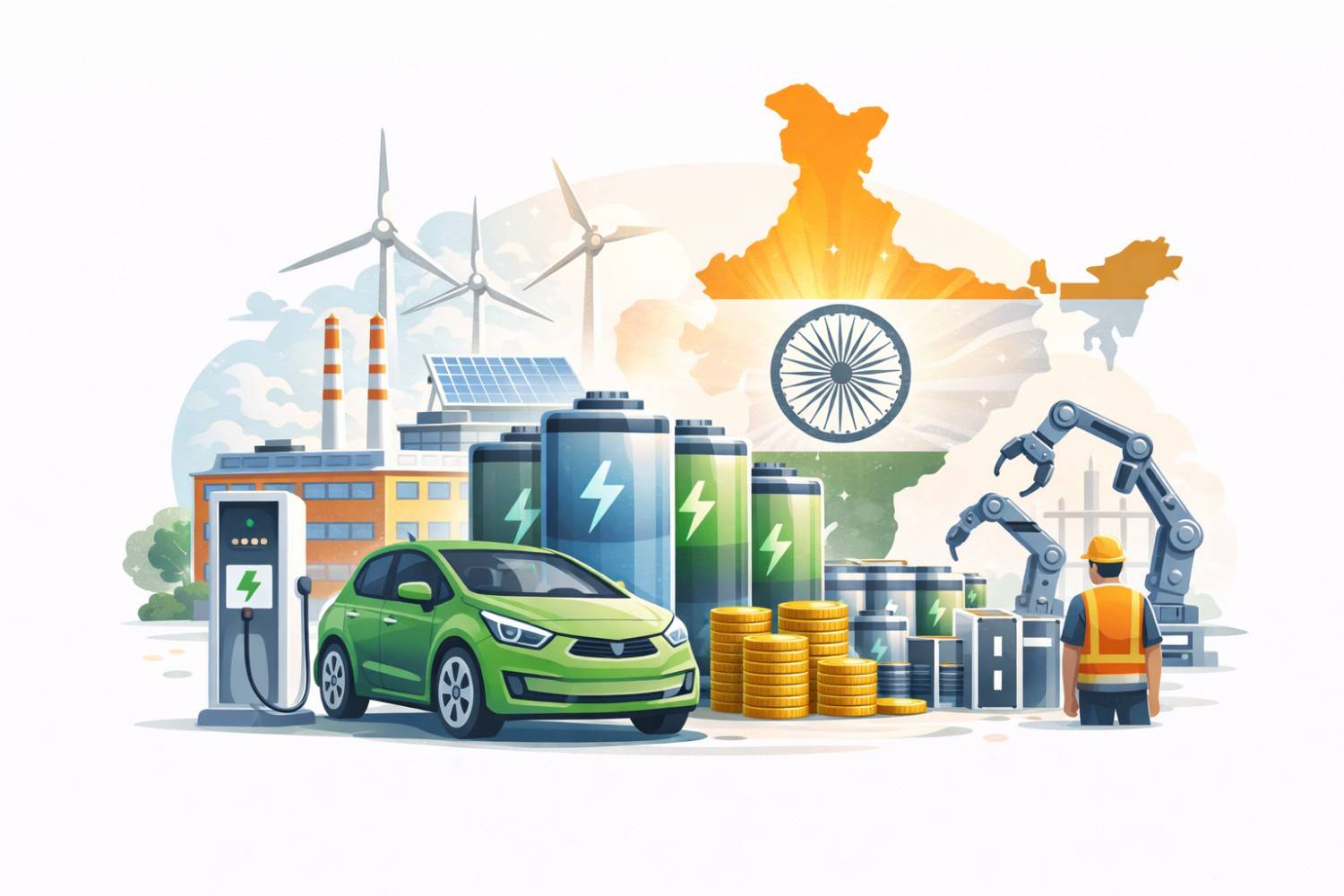
Andhra Pradesh is set to host a major lithium battery gigafactory project with an estimated investment of ₹8,175 crore, marking a significant push for India’s clean energy and electric vehicle (EV) manufacturing ecosystem.
The proposed facility is expected to strengthen domestic battery production capacity, reduce import dependence and generate large-scale employment. State officials say the project aligns with India’s long-term goal of accelerating electric mobility and energy storage adoption.
A Big Step for India’s EV Ecosystem
Lithium-ion batteries form the core of electric vehicles and renewable energy storage systems. Currently, a significant portion of battery cells and components are imported.
The new gigafactory in Andhra Pradesh aims to:
- Manufacture advanced lithium battery cells
- Support domestic EV manufacturers
- Strengthen the clean energy supply chain
- Boost exports in the future
With India’s EV market expanding steadily, domestic battery manufacturing has become a strategic priority.
Investment Details and Economic Impact
The total proposed investment of ₹8,175 crore positions this project among the largest battery manufacturing initiatives in the country.
Key expected impacts include:
- Direct and indirect job creation
- Development of ancillary industries
- Growth in logistics and infrastructure
- Increase in local industrial output
Officials indicate that thousands of employment opportunities could be generated across skilled and semi-skilled segments once the plant becomes operational.
Why Andhra Pradesh?
Andhra Pradesh has been actively promoting itself as a manufacturing hub through:
- Industrial land availability
- Port connectivity
- Policy incentives
- Renewable energy capacity
The state’s access to ports is expected to support raw material imports and future exports of battery components.
The project is likely to be set up in an industrial corridor with established infrastructure support.
Boost to Electric Vehicle Manufacturing
India’s electric vehicle adoption has grown steadily in recent years, supported by central and state incentives.
A domestic gigafactory could:
- Lower battery costs over time
- Improve supply chain stability
- Support local EV startups
- Encourage global manufacturers to invest in India
Battery costs account for a major share of EV pricing. Increasing local production could improve affordability in the long term.
Alignment With National Clean Energy Goals
India has committed to expanding renewable energy capacity and reducing carbon emissions intensity.
Energy storage systems powered by lithium batteries are essential for:
- Solar power storage
- Wind energy balancing
- Grid stabilisation
The gigafactory is expected to contribute to both the EV transition and renewable energy storage solutions.
Supply Chain and Raw Materials
Lithium battery production requires access to raw materials such as lithium, cobalt and nickel.
India has been exploring strategies to secure critical mineral supplies through:
- International partnerships
- Domestic exploration
- Recycling initiatives
The Andhra Pradesh facility may also encourage battery recycling and circular economy practices in the future.
Job Creation and Skill Development
The project is expected to generate:
- Manufacturing jobs
- Engineering and technical roles
- Research and development opportunities
- Supply chain and logistics positions
Skill development programs may be introduced to train workers in advanced battery technology and quality control processes.
The move could strengthen India’s technical workforce in clean energy manufacturing.
Infrastructure and Timeline
While detailed timelines are yet to be formally announced, projects of this scale typically move through phases:
- Land acquisition and approvals
- Construction and equipment installation
- Trial production
- Commercial operations
Industry observers will closely watch how quickly the project moves from announcement to commissioning.
Industry and Market Reactions
EV manufacturers and clean energy firms have welcomed the announcement, viewing it as a positive step toward building a self-reliant battery ecosystem.
Market analysts say domestic cell manufacturing could improve investor confidence in India’s green mobility sector.
The move may also attract related investments in battery components, electronics and charging infrastructure.
Conclusion
The ₹8,175 crore lithium battery gigafactory planned in Andhra Pradesh represents a major milestone in India’s clean energy transition.
By strengthening domestic battery manufacturing, the project could support electric vehicle growth, enhance energy storage capacity and generate substantial employment.
As India works toward expanding its EV ecosystem and renewable energy footprint, large-scale battery production facilities like this will play a critical role in shaping the country’s sustainable future.
Last Updated on: Tuesday, February 24, 2026 4:57 pm by News Proton Team | Published by: News Proton Team on Tuesday, February 24, 2026 2:56 pm | News Categories: Business