


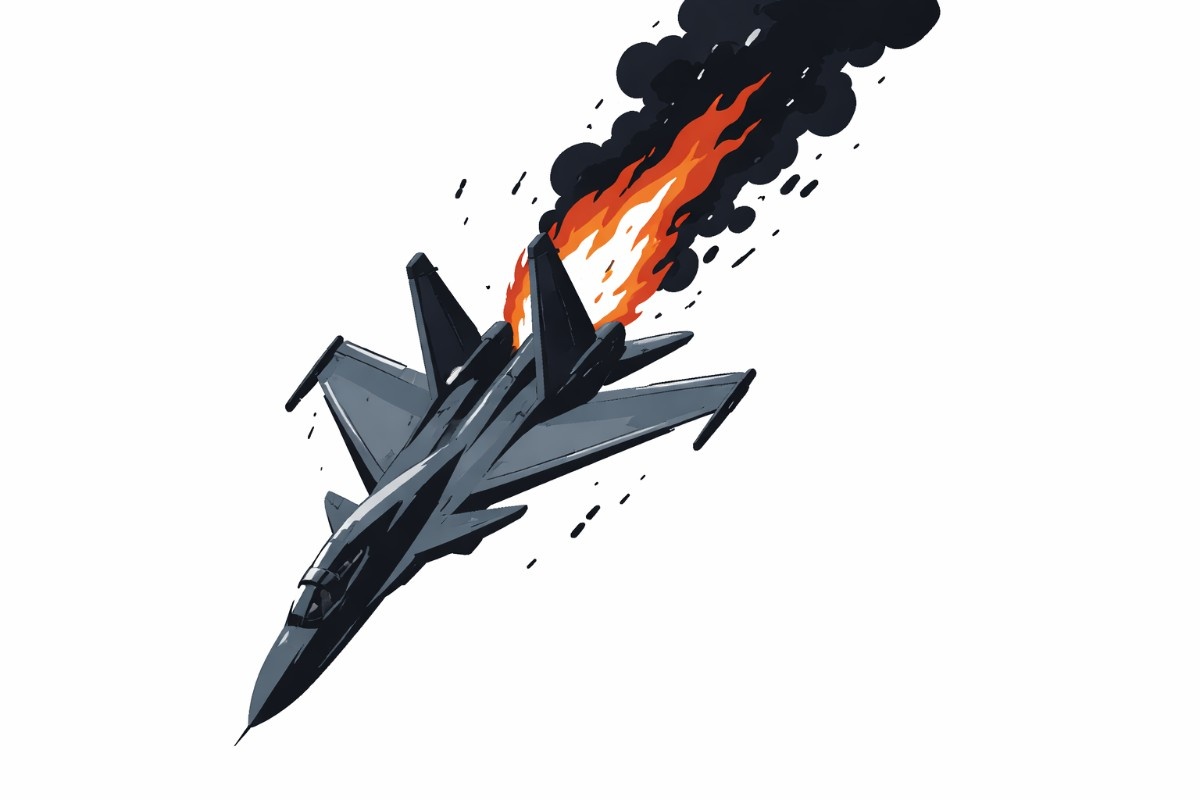


The crash of an Indian Air Force Sukhoi-30MKI fighter jet in Assam has renewed discussions about aviation safety standards, operational procedures and aircraft maintenance within India’s military aviation system. The incident, which occurred during a routine training sortie, has drawn attention from defence experts and policymakers who are closely watching the outcome of the official investigation into the accident.
The twin-seat Sukhoi-30MKI aircraft had taken off from an air force base in Assam as part of a scheduled training mission when it reportedly lost contact with ground control before crashing in a remote area of the state. Initial reports indicated that the aircraft went down in a hilly region, prompting an immediate response from search and rescue teams dispatched by the Indian Air Force and local authorities. Officials later confirmed that the aircraft had crashed during the mission and that an investigation would be launched to determine the exact cause of the accident.
In line with standard procedure in military aviation incidents, the Indian Air Force ordered a Court of Inquiry to examine the circumstances leading to the crash. Such inquiries typically assess technical performance, weather conditions, communication records and maintenance history of the aircraft. Investigators also analyze flight data and cockpit recordings to determine whether the accident was caused by technical malfunction, operational factors or external conditions.
The Sukhoi-30MKI is a central component of India’s combat aviation fleet and plays a major role in the country’s air defence capabilities. Developed through cooperation between India and Russia and manufactured in large numbers by Hindustan Aeronautics Limited, the aircraft is designed for air superiority missions, long-range operations and precision strikes. Known for its advanced avionics and high maneuverability, the Sukhoi-30MKI has been deployed across multiple air bases and remains one of the most powerful fighter jets in the Indian Air Force inventory.
Because of the aircraft’s strategic importance, any accident involving the platform tends to attract significant attention from the defence community. Military aviation experts note that fighter jet operations involve complex flight conditions and high-performance manoeuvres, making safety oversight and rigorous maintenance procedures essential.
The Assam crash has also drawn attention because of the strategic significance of India’s northeastern region. Air bases in the region play a critical role in maintaining operational readiness and safeguarding India’s eastern airspace. Training missions are routinely conducted from these bases to ensure that pilots remain prepared for a wide range of operational scenarios. However, the region’s terrain and weather conditions can sometimes pose additional challenges for flight operations.
Over the years, accidents involving fighter aircraft have periodically sparked discussions about aircraft maintenance systems, pilot training standards and modernization requirements within the armed forces. Defence analysts emphasize that while military aviation has strong safety frameworks, continuous upgrades in technology and operational procedures are necessary to minimize risks.
The Sukhoi-30MKI fleet itself has undergone several upgrades since its induction into the Indian Air Force, including improvements to avionics, weapons integration and flight systems. The government has also approved modernization initiatives aimed at extending the aircraft’s operational life and enhancing its capabilities.
Following the crash, aviation experts have highlighted the importance of detailed accident investigations in strengthening future safety measures. Lessons drawn from such incidents often lead to improvements in maintenance protocols, training practices and technical modifications to aircraft systems.
The Indian Air Force has reiterated its commitment to maintaining high standards of safety and operational readiness while carrying out the investigation. Officials have stressed that determining the cause of the accident is essential not only for accountability but also for ensuring that preventive measures are implemented wherever necessary.
For the defence community, the incident serves as a reminder of the risks associated with military aviation. Fighter pilots operate in demanding environments where even routine training missions involve complex manoeuvres and advanced aircraft systems.
As the inquiry progresses, its findings are expected to contribute to ongoing discussions about safety management, modernization and operational preparedness within India’s air power framework. The results may also play a role in shaping future safety policies designed to strengthen the reliability and effectiveness of India’s military aviation operations.
Disclaimer: The information presented in this article is intended for general informational purposes only. While every effort is made to ensure accuracy, completeness, and timeliness, data such as prices, market figures, government notifications, weather updates, holiday announcements, and public advisories are subject to change and may vary based on location and official revisions. Readers are strongly encouraged to verify details from relevant official sources before making financial, investment, career, travel, or personal decisions. This publication does not provide financial, investment, legal, or professional advice and shall not be held liable for any losses, damages, or actions taken in reliance on the information provided.
Edited by Madhusudhan Reddy
Last Updated on: Friday, March 6, 2026 3:04 pm by News Proton Team | Published by: News Proton Team on Friday, March 6, 2026 3:04 pm | News Categories: India