
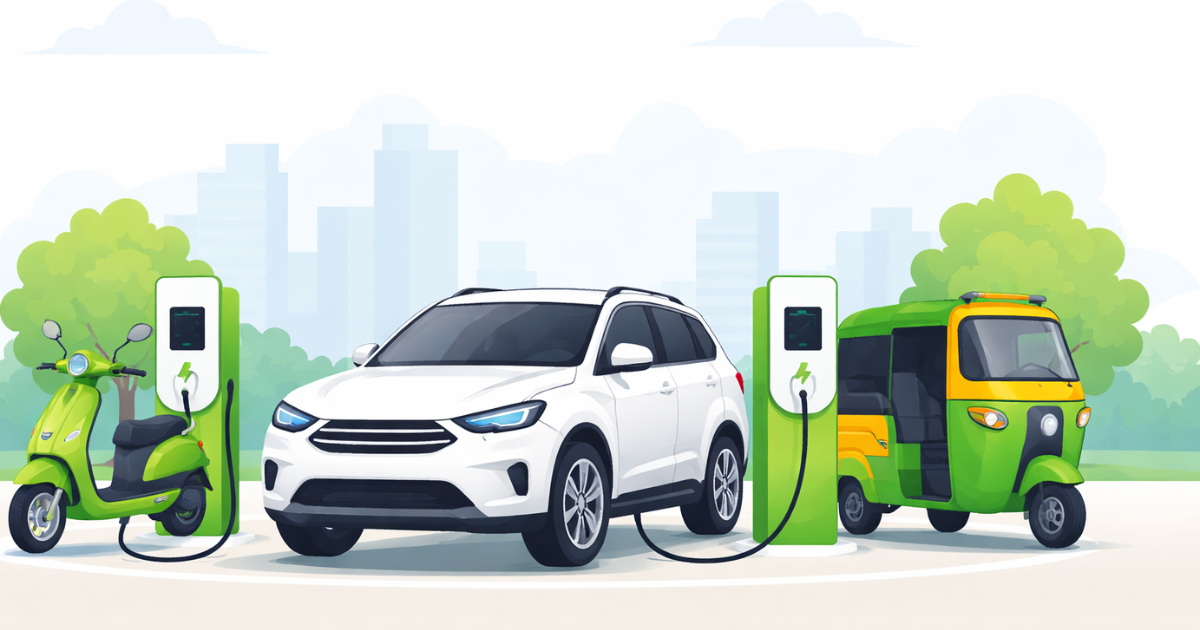
India’s automotive market is undergoing a structural shift as it moves into 2026, with electric vehicles increasingly influencing consumer demand patterns across segments. While internal combustion engine vehicles continue to dominate overall volumes, the growing presence of electric two-wheelers, three-wheelers, and passenger cars is reshaping how buyers evaluate cost, convenience, and long-term ownership. The transition is gradual rather than abrupt, but it is now visible enough to affect product planning, pricing strategies, and consumer expectations.
The most significant change in India’s EV adoption story remains concentrated in two-wheelers and three-wheelers. These segments have seen sustained demand because electrification directly addresses their core use case: frequent, short-distance travel with high fuel sensitivity. For daily commuters, last-mile delivery operators, and shared mobility users, electric powertrains offer a clear reduction in operating costs, particularly in urban and semi-urban markets. This economic logic has allowed EVs in these categories to move beyond early adopters and enter the mainstream purchasing funnel.
Passenger vehicles tell a more measured story. Electric cars still represent a small share of total car sales, but their acceptance has improved steadily over the past two years. Buyers in major cities are increasingly considering EVs alongside petrol and diesel options, especially in compact and mid-size segments that align with city driving needs. Rather than being viewed as experimental technology, EVs are now assessed on practical criteria such as daily range, charging access, service support, and resale confidence.
Government policy continues to play a central role in shaping this transition. The policy framework supporting electric mobility has evolved from earlier incentive-led approaches toward a broader focus on ecosystem development. Current schemes emphasise vehicle adoption alongside charging infrastructure expansion and domestic manufacturing support. For buyers in 2026, this translates into a market where incentives are more targeted and time-bound, making purchase timing and eligibility an important consideration in final pricing.
Charging infrastructure has expanded at a national level, with thousands of public charging stations now operational across highways, cities, and transport hubs. However, consumer confidence is being shaped less by headline numbers and more by reliability and convenience. For most private buyers, home or workplace charging remains the decisive factor in choosing an EV. Public charging is increasingly viewed as a support system rather than a primary dependency, especially for urban users with predictable daily travel patterns.
Urban transport electrification is also influencing private demand indirectly. Large-scale induction of electric buses and fleet vehicles in major cities has accelerated investments in grid upgrades, charging depots, and maintenance capabilities. This broader electrification push has helped normalise EV technology in everyday life, reducing hesitation among private buyers who now see electric mobility operating at scale in public systems.
Manufacturers have responded to these shifts by accelerating EV product pipelines, particularly in body styles familiar to Indian consumers. Compact SUVs and city-focused models are becoming the preferred entry points for electric cars, reflecting buyer comfort with familiar formats rather than radical design departures. This strategy suggests that automakers are increasingly confident about sustained demand rather than treating EVs as niche offerings.
For consumers planning a purchase in 2026, the EV decision is becoming less about technology novelty and more about suitability. Buyers are placing greater emphasis on total cost of ownership, charging feasibility, service accessibility, and warranty coverage. Battery longevity, real-world efficiency, and manufacturer commitment to long-term support have emerged as key evaluation factors, especially for first-time EV owners.
The broader automotive demand shift in India indicates that electrification is no longer a future concept but a present influence. While internal combustion vehicles will continue to serve diverse needs across price bands and geographies, EVs are carving out a stable and expanding role in the market. The transition is being driven by economics, policy alignment, and gradual improvements in infrastructure rather than abrupt disruption.
As India enters 2026, the EV market rewards buyers who align vehicle choice with realistic usage patterns and charging access. The demand shift is steady and selective, favouring practical adoption over experimentation. For consumers, this marks a phase where electric mobility is not just an alternative, but an increasingly normal part of the automotive decision-making process.
Disclaimer: The information presented in this article is intended for general informational purposes only. While every effort is made to ensure accuracy, completeness, and timeliness, data such as prices, market figures, government notifications, weather updates, holiday announcements, and public advisories are subject to change and may vary based on location and official revisions. Readers are strongly encouraged to verify details from relevant official sources before making financial, investment, career, travel, or personal decisions. This publication does not provide financial, investment, legal, or professional advice and shall not be held liable for any losses, damages, or actions taken in reliance on the information provided.
Last Updated on: Monday, February 9, 2026 2:33 pm by News Proton Team | Published by: News Proton Team on Monday, February 9, 2026 2:33 pm | News Categories: Automobile, General