
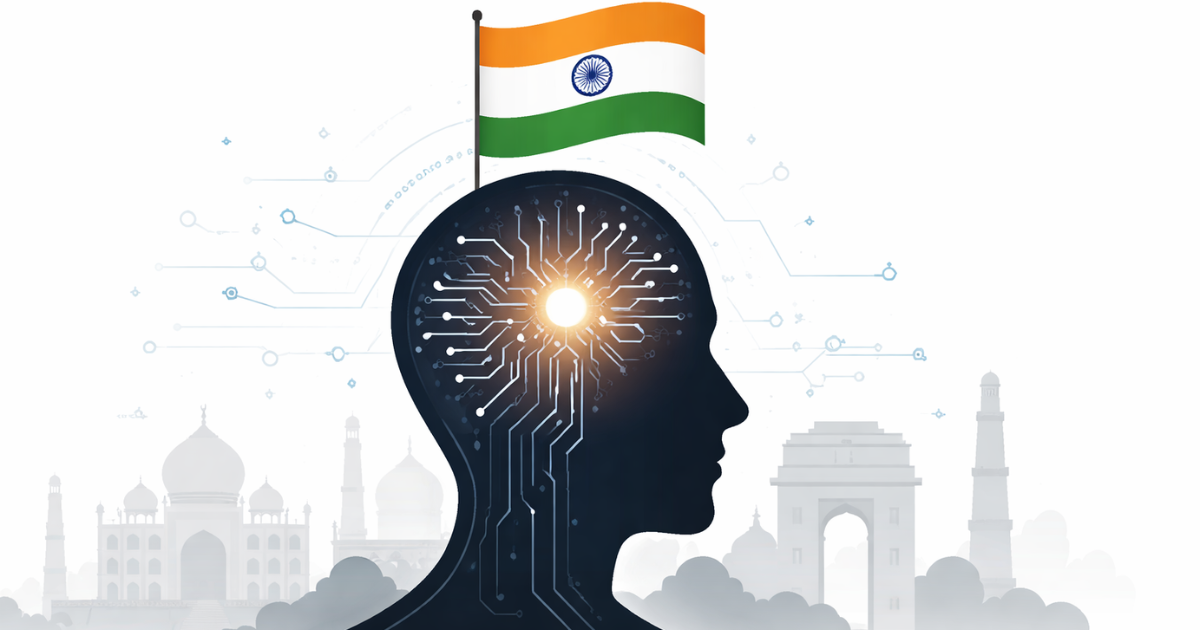
New Delhi witnessed one of the most consequential technology gatherings in recent memory as the India AI Impact Summit 2026 opened at Bharat Mandapam, bringing together political leaders, global technology executives, policymakers, researchers and entrepreneurs under one roof. Positioned as the first major global AI summit hosted in the Global South at this scale, the event signalled India’s ambition not merely to participate in the artificial intelligence revolution but to shape its direction.
Inaugurating the summit, Prime Minister Narendra Modi framed artificial intelligence as both an economic opportunity and a societal responsibility. He reiterated that India’s digital public infrastructure — built over the past decade through platforms such as Aadhaar, UPI and other scalable public systems — provides a foundation for AI innovation that can serve large populations responsibly. The message was clear: India intends to align AI with its long-term vision of becoming a developed nation by 2047 while ensuring inclusion remains central to technological progress.
The summit drew participation from heads of state, cabinet ministers, regulators and technology leaders from across continents. Executives from leading global AI companies joined Indian startup founders and researchers in a series of plenary discussions and thematic sessions. Conversations ranged from model safety and governance frameworks to AI’s transformative impact on healthcare, education, agriculture, manufacturing and public services. The presence of senior global technology leaders underscored India’s growing importance in the AI supply chain — as a talent hub, a data-rich environment and a rapidly expanding digital economy.
A defining theme of the summit was human-centric AI. Speakers repeatedly emphasised that artificial intelligence must augment human capability rather than replace it. Policymakers warned against over-reliance on automation in sensitive sectors such as education and public administration. The debate reflected a broader global concern: while AI offers productivity gains and innovation at unprecedented speed, it also raises questions around employment disruption, misinformation, bias and data privacy.
India’s Chief Economic Advisor highlighted the need to align AI-driven growth with mass employability, arguing that skilling and reskilling will determine whether AI becomes a force multiplier or a source of inequality. Several panels focused on education reform, vocational training and the development of AI-ready talent. With India home to one of the world’s youngest populations, the summit positioned skill development as a strategic priority rather than a secondary outcome.
Another central pillar of the discussions was sustainability. Delegates examined the environmental cost of large-scale computing infrastructure and the growing energy demands of AI systems. Indian policymakers outlined the importance of integrating renewable energy strategies with data centre expansion. The intersection of AI and climate resilience also featured prominently, with case studies presented on predictive analytics for agriculture, disaster response and water management.
Digital public infrastructure emerged as a key differentiator in India’s AI story. Officials and industry representatives showcased how interoperable digital platforms have accelerated financial inclusion and service delivery. The extension of digital payment services to international visitors during the summit served as a demonstration of India’s ability to integrate technology at scale. Analysts noted that this ecosystem may provide fertile ground for AI applications in governance, fintech and public welfare delivery.
The summit was not without challenges. Reports from the opening day pointed to logistical strains due to the scale of participation, highlighting the growing appetite for AI discourse in India. Critics also questioned whether high-level declarations would translate into enforceable policies and tangible grassroots outcomes. Some observers cautioned that inclusive rhetoric must be matched by measurable frameworks to ensure that AI benefits extend beyond metropolitan innovation clusters.
Despite the criticisms, the broader message of the summit was unmistakable. India is positioning itself as a convenor between developed and developing economies in global AI governance. By hosting leaders from diverse geopolitical blocs, the country signalled its intention to act as a bridge in shaping international norms around AI ethics, safety and equitable access.
For India’s domestic technology ecosystem, the summit represents an inflection point. Startups gained visibility on an international stage, research institutions deepened collaborations and investors explored partnerships in emerging AI applications. With sustained government backing under the IndiaAI Mission and continued private investment in cloud infrastructure and semiconductor capacity, the country’s AI ambitions appear to be moving from policy articulation to implementation.
The long-term impact of the India AI Impact Summit 2026 will depend on execution. If the commitments discussed translate into regulatory clarity, workforce transformation and innovation funding, India could emerge as a pivotal AI hub that balances growth with responsibility. If not, the summit risks being remembered as a symbolic gathering rather than a structural turning point.
For now, the event has placed India firmly at the centre of the global AI conversation. In a world grappling with how to govern transformative technologies, New Delhi has made its case: that the future of artificial intelligence must be inclusive, development-oriented and anchored in public interest. Whether that vision reshapes the global tech order will unfold in the years ahead, but the 2026 summit has ensured that India’s voice will be part of that dialogue.
Add newsproton.com as preferred source on google – Click here
Disclaimer: The information presented in this article is intended for general informational purposes only. While every effort is made to ensure accuracy, completeness, and timeliness, data such as prices, market figures, government notifications, weather updates, holiday announcements, and public advisories are subject to change and may vary based on location and official revisions. Readers are strongly encouraged to verify details from relevant official sources before making financial, investment, career, travel, or personal decisions. This publication does not provide financial, investment, legal, or professional advice and shall not be held liable for any losses, damages, or actions taken in reliance on the information provided.
Last Updated on: Tuesday, February 17, 2026 9:51 am by News Proton Team | Published by: News Proton Team on Tuesday, February 17, 2026 9:51 am | News Categories: Technology