
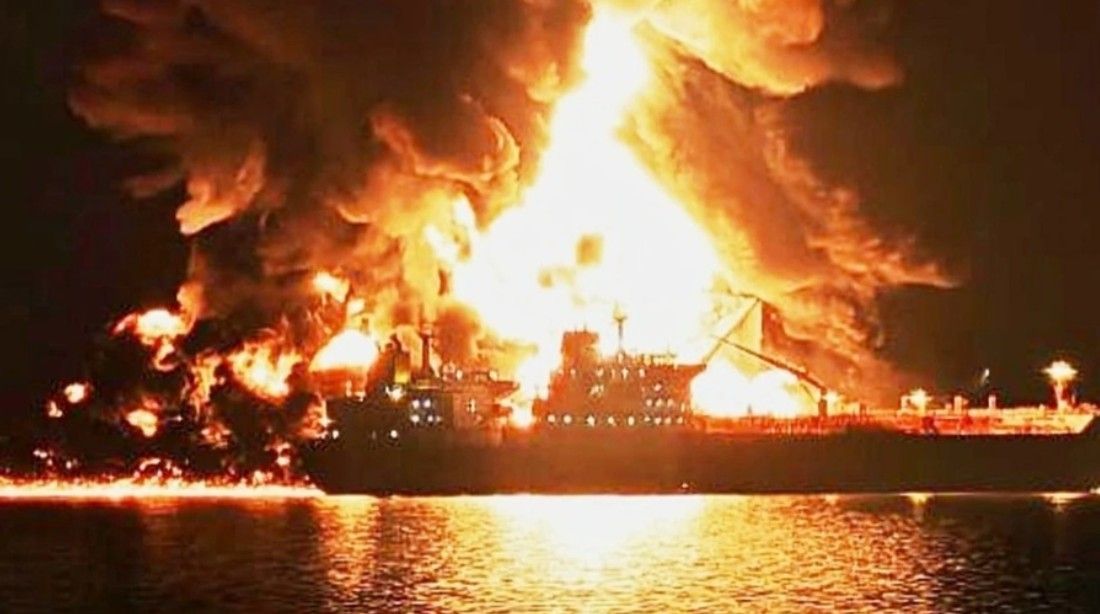
Tehran dismisses Washington’s warning and warns of retaliation, raising concerns over global oil supply and regional stability.
Tensions in the Middle East have intensified after Donald Trump issued a warning to Iran to reopen the strategically crucial Strait of Hormuz, a demand that Tehran has firmly rejected. On April 6, Iranian authorities said they would not comply with what they described as an ultimatum, underlining their readiness to defend national interests amid an increasingly volatile regional situation.
Iranian officials dismissed the US warning, portraying it as a sign of pressure tactics rather than a credible threat. Authorities in Tehran maintained that the country would not be coerced into reopening the strait, which remains a vital passage for global energy shipments. The reported US warning included a 48-hour deadline, with threats of targeting key Iranian infrastructure if the strait was not reopened and no agreement was reached.
Responding to the warning, Foreign Ministry spokesperson Ismail Baghaei said Iran would not be intimidated and retains the capability to defend itself against any form of aggression. He added that any attacks, particularly those aimed at civilian infrastructure such as power facilities, would be met with proportional retaliation, signaling a firm stance against further escalation.
Amid these developments, reports cited by Al Jazeera indicated that recent strikes attributed to US and Israeli forces have targeted Iranian civilian and petrochemical sites, resulting in casualties. Among the incidents mentioned was a strike near the Bushehr nuclear facility, which reportedly led to at least one fatality, though independent verification remains limited.
The Strait of Hormuz holds critical importance in global trade, as a substantial share of the world’s oil exports passes through the narrow waterway. Any disruption to its operations can have immediate consequences for international energy markets, potentially driving up fuel prices and affecting economies dependent on oil imports. Iran has historically used the threat of closing the strait as leverage during periods of geopolitical tension.
In a separate development that has added to the strain in bilateral ties, US authorities reportedly detained individuals alleged to be relatives of Qasem Soleimani, though those involved have denied any such connection. The episode underscores the deepening mistrust between the two sides at a time when diplomatic engagement appears limited.
The ongoing standoff carries significant implications for both regional stability and the global economy. A prolonged closure of the Strait of Hormuz could disrupt supply chains and intensify economic pressures worldwide, while the risk of further military escalation raises concerns about civilian safety and infrastructure damage in the region. With both sides holding firm positions, the situation remains uncertain, and the prospects for immediate de-escalation appear limited.
Input & Images : Hindusthan Samachar
Edited by Madhusudhan Reddy
Last Updated on: Monday, April 6, 2026 1:34 pm by Madhusudhan Reddy | Published by: Madhusudhan Reddy on Monday, April 6, 2026 1:34 pm | News Categories: Trending, General