
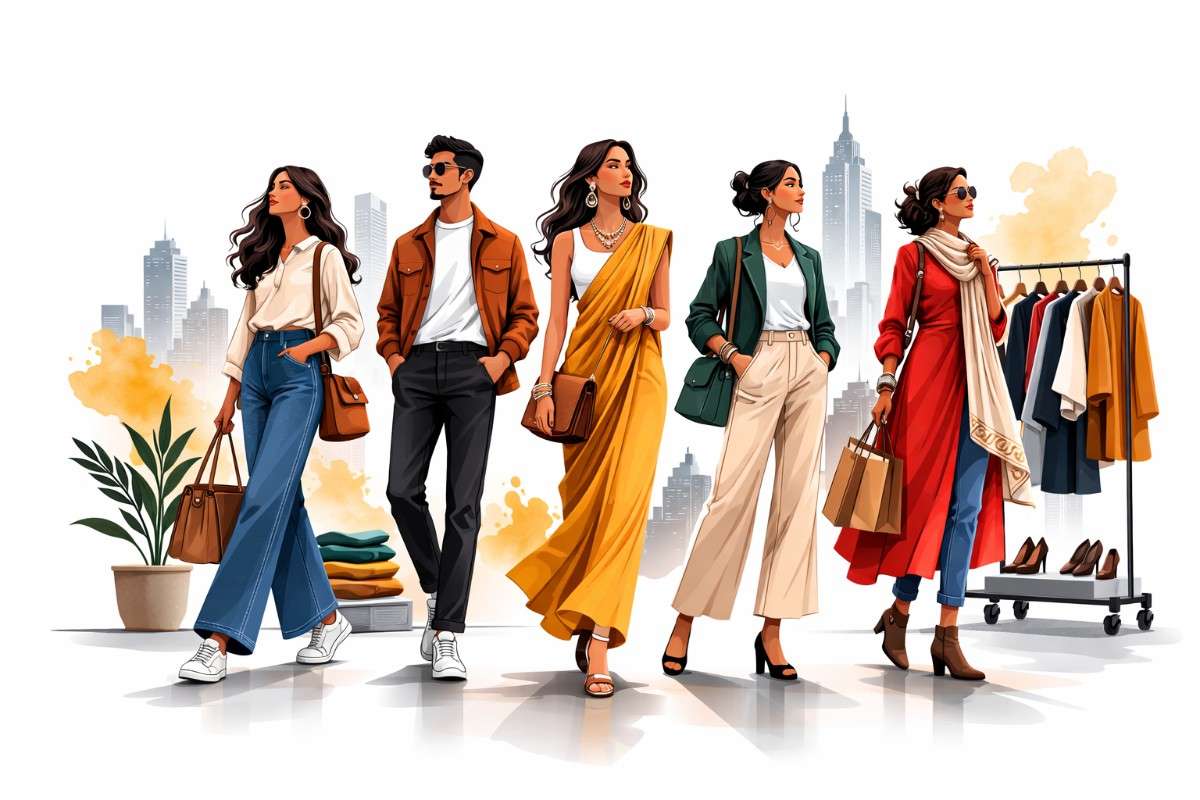
India’s fashion landscape in 2026 reflects a decisive shift in consumer mindset. Search trends, retail data, and runway narratives indicate that Indian shoppers are no longer simply tracking global fashion cycles; they are actively shaping them. Across metros and tier-two cities alike, fashion discovery is increasingly driven by digital platforms, seasonal festivals, climate considerations, and a growing appetite for individuality. What Indians are searching for this season reveals a wardrobe in transition — one that balances nostalgia, sustainability, craft revival, and contemporary global aesthetics.
One of the most visible patterns this year is the continued influence of early-2000s and late-1990s style references. The resurgence of Y2K silhouettes — including low-rise denims, cargo trousers, cropped tops, and body-skimming dresses — has translated strongly into Indian search behavior and street style. However, unlike the original iteration, the 2026 revival reflects a more refined and adaptable approach. Indian consumers are pairing retro denim cuts with structured blazers, minimalist accessories, and handcrafted jewelry, signaling a preference for wearable nostalgia rather than costume-like replication. The demand for barrel-leg jeans, relaxed wide-leg fits, and darker denim washes suggests that comfort and versatility remain key priorities.
Color trends this season reveal a palette that is both expressive and practical. Soft pastels, icy blues, and cloud whites are seeing heightened attention, particularly for spring and summer wardrobes. These shades align well with India’s warmer climate and resonate with consumers seeking breathable, lightweight ensembles. At the same time, deeper earthy tones — rust, olive, chocolate brown, and muted maroons — are gaining traction for transitional dressing and festive wear. The balance between optimism and grounded tones reflects broader global forecasting insights while remaining sensitive to India’s cultural calendar, where festival seasons significantly influence purchase cycles.
Fabric preferences in 2026 further underline the country’s climate-conscious and comfort-driven approach. Lightweight textiles such as cotton blends, organza variations, and fluid synthetic alternatives are drawing search interest for their practicality and affordability. There is also sustained curiosity around traditional textiles reinterpreted for contemporary wardrobes. Handloom weaves, block prints, and craft-based techniques are being styled in modern silhouettes, particularly in Indo-Western ensembles. This indicates that Indian shoppers are not abandoning heritage but rather repositioning it within everyday fashion.
Indo-Western fusion remains central to what consumers are actively exploring. The combination of kurtas with tailored trousers, sarees styled with belts or structured blouses, and ethnic jackets layered over contemporary basics continues to dominate both online queries and curated retail displays. This fusion trend reflects the realities of modern Indian life, where professional, social, and festive roles often overlap within a single week. Versatility is not just desirable; it is necessary.
Accessories are also undergoing a subtle reinvention. Instead of oversized statement pieces dominating the narrative, searches suggest a move toward curated detailing. Brooches, refined bag charms, structured handbags, and layered jewelry are gaining attention as tools for personalization. Consumers appear to be focusing on adaptable accessories that can transition from work to celebration without excessive styling changes. This shift signals a broader move toward thoughtful wardrobe building rather than impulse trend adoption.
Another defining feature of 2026 fashion in India is the growing influence of digital discovery. Social media platforms and short-form video content continue to shape what consumers search for, but shoppers are demonstrating greater discernment. Instead of blindly following viral aesthetics, many are seeking styling inspiration that aligns with body diversity, climate suitability, and budget considerations. This indicates a maturing fashion audience that values practicality alongside aspiration.
Sustainability remains part of the conversation, though increasingly framed through longevity rather than overt activism. Searches related to timeless staples, capsule wardrobes, and re-styling techniques are rising, suggesting that consumers are interested in maximizing use rather than constantly refreshing wardrobes. Investment in classic silhouettes — tailored trousers, structured blazers, neutral sarees, and versatile dresses — reflects a move toward durability in both design and consumption habits.
At the premium and designer level, Indian fashion continues to command global attention. Indian labels presenting internationally and collaborating across borders have strengthened the perception of India as a source of craftsmanship and design innovation. Domestically, this translates into heightened consumer interest in heritage textiles, artisanal embellishments, and culturally rooted storytelling. The aspirational buyer is increasingly conscious of narrative — who made the garment, what tradition it represents, and how it fits into a larger cultural identity.
What ultimately defines the 2026 fashion forecast for India is not a single dominant trend but a layered approach to style. The Indian consumer is seeking garments that are expressive yet functional, nostalgic yet contemporary, global yet culturally anchored. Fashion searches this season reveal a wardrobe that is evolving thoughtfully rather than dramatically. Instead of chasing novelty for its own sake, shoppers are prioritizing adaptability, climate comfort, and personal authenticity.
As the year unfolds, India’s fashion conversation is likely to remain dynamic, shaped by festival calendars, digital influence, and economic realities. But one conclusion is clear: in 2026, Indian fashion is less about imitation and more about interpretation. Consumers are not merely adopting trends; they are redefining them to suit a uniquely Indian rhythm of life.
Add newsproton.com as preferred source on google – Click here
Disclaimer: The information presented in this article is intended for general informational purposes only. While every effort is made to ensure accuracy, completeness, and timeliness, data such as prices, market figures, government notifications, weather updates, holiday announcements, and public advisories are subject to change and may vary based on location and official revisions. Readers are strongly encouraged to verify details from relevant official sources before making financial, investment, career, travel, or personal decisions. This publication does not provide financial, investment, legal, or professional advice and shall not be held liable for any losses, damages, or actions taken in reliance on the information provided.
Edited by Madhusudhan Reddy
Last Updated on: Wednesday, February 25, 2026 11:01 am by News Proton Team | Published by: News Proton Team on Wednesday, February 25, 2026 11:01 am | News Categories: General