
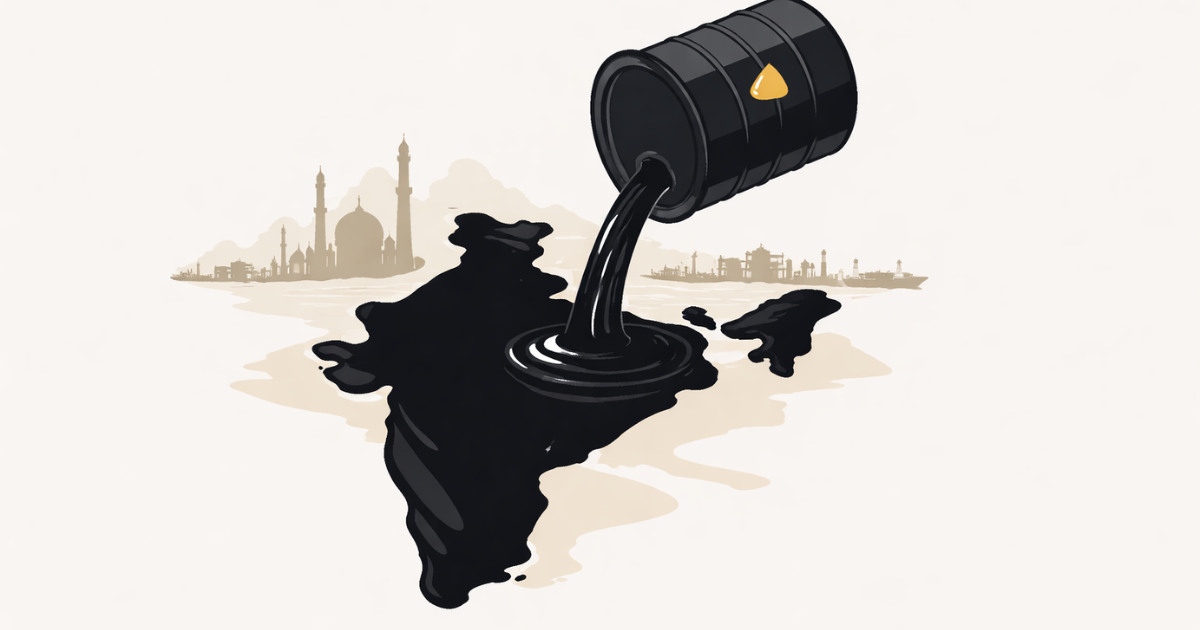
Rising geopolitical tensions in the Middle East have once again brought global energy markets into focus, with crude oil prices reacting sharply to developments in the region. For India, one of the world’s largest oil importers, fluctuations in global crude benchmarks are more than just financial market movements — they carry direct implications for inflation, fiscal stability and economic growth.
The Middle East remains central to global oil supply. Countries such as Saudi Arabia, Iraq, the United Arab Emirates, Kuwait and Iran collectively account for a significant share of global crude production. A substantial portion of the world’s oil trade passes through the Strait of Hormuz, a narrow maritime corridor between the Persian Gulf and the Gulf of Oman. According to the U.S. Energy Information Administration, roughly one-fifth of globally traded petroleum liquids move through this chokepoint. Any threat to shipping lanes or oil infrastructure in the region typically injects a “risk premium” into oil prices.
Recent tensions involving regional powers and external stakeholders have heightened market sensitivity. Even in the absence of sustained physical supply disruption, the mere possibility of escalation can push benchmark crude prices higher. Traders often factor geopolitical uncertainty into futures contracts, leading to volatility. Historically, however, prices tend to stabilise if actual supply flows remain uninterrupted and global inventories are sufficient.
For India, the stakes are particularly high. The country imports more than 85 percent of its crude oil requirements, making it highly exposed to global price movements. While India has diversified its sourcing over the years, including increased purchases from Russia following Western sanctions in 2022, West Asian producers continue to play a vital role in meeting India’s energy demand.
When crude prices rise, India’s import bill increases correspondingly. Higher import costs widen the trade deficit and can put pressure on the current account balance. A sustained rise in oil prices also tends to weaken the rupee against the U.S. dollar, since oil is traded globally in dollars. A weaker currency further amplifies the cost of imports, creating a feedback loop that complicates macroeconomic management.
Inflation is another key concern. Fuel prices directly influence transportation and logistics costs, which in turn affect the prices of food and essential goods. Diesel, widely used in agriculture and freight movement, is particularly sensitive. A sustained increase in crude prices can therefore push up consumer price inflation. The Reserve Bank of India closely monitors oil trends, as elevated fuel-driven inflation can influence monetary policy decisions, including interest rate adjustments.
The government’s fiscal position can also come under strain. To shield consumers from sharp retail fuel price hikes, authorities may choose to adjust excise duties or provide subsidies. Such measures, while offering short-term relief, can reduce revenue collections and widen the fiscal deficit. The balancing act between maintaining price stability and safeguarding public finances becomes more delicate when global oil markets are volatile.
The broader economic impact extends to energy-intensive sectors such as aviation, manufacturing and transportation. Higher fuel costs can erode corporate margins, slow investment and dampen consumption. For a fast-growing economy like India, sustained high oil prices can act as a drag on growth momentum.
At the same time, India has taken steps in recent years to reduce vulnerability to external shocks. Strategic petroleum reserves have been built to provide a buffer against supply disruptions. The country has also accelerated investments in renewable energy, with ambitious targets for solar and wind capacity. Efforts to promote electric mobility and improve energy efficiency are part of a longer-term strategy to lower dependence on imported fossil fuels.
Global oil markets are shaped by multiple factors beyond geopolitics, including OPEC+ production decisions, U.S. shale output, and global demand trends. Even if tensions in the Middle East ease, supply-demand dynamics and policy decisions among major producers will continue to influence prices. Conversely, a significant disruption in shipping routes or production facilities in the region could trigger sharper and more prolonged price spikes, intensifying pressure on import-dependent economies.
For India, the immediate challenge lies in navigating short-term volatility while continuing structural reforms that enhance energy security. Policymakers will need to monitor both diplomatic developments in West Asia and global supply indicators to anticipate potential shocks.
Middle East tensions serve as a reminder of the interconnected nature of geopolitics and economic stability. In an era where energy security remains a cornerstone of national growth, movements in oil prices thousands of kilometres away can quickly translate into tangible effects for Indian households and businesses.
Add newsproton.com as preferred source on google – Click here
Disclaimer: The information presented in this article is intended for general informational purposes only. While every effort is made to ensure accuracy, completeness, and timeliness, data such as prices, market figures, government notifications, weather updates, holiday announcements, and public advisories are subject to change and may vary based on location and official revisions. Readers are strongly encouraged to verify details from relevant official sources before making financial, investment, career, travel, or personal decisions. This publication does not provide financial, investment, legal, or professional advice and shall not be held liable for any losses, damages, or actions taken in reliance on the information provided.
Last Updated on: Monday, February 16, 2026 2:14 pm by News Proton Team | Published by: News Proton Team on Monday, February 16, 2026 2:14 pm | News Categories: General