
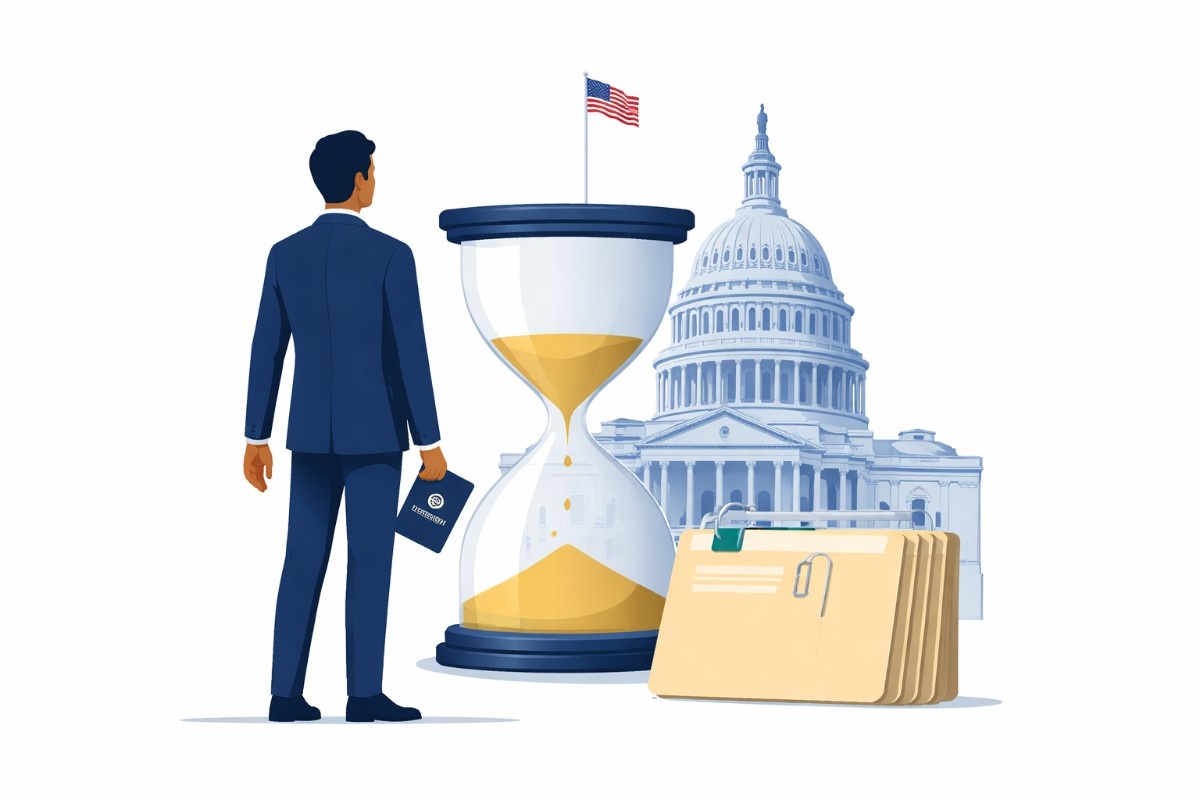
The United States Department of State’s February 2026 Visa Bulletin has brought little immediate relief for thousands of Indian nationals waiting in long employment-based and family-based green card queues. The latest bulletin, which determines when immigrant visas become available, largely reflects continued backlogs in key categories affecting Indian applicants, particularly in the employment-based second and third preference groups.
The Visa Bulletin, issued monthly by the U.S. Department of State, outlines two crucial timelines: the “Final Action Dates,” which indicate when green cards can actually be issued, and the “Dates for Filing,” which determine when applicants may submit adjustment of status applications. For Indian nationals, whose demand for employment-based visas significantly exceeds annual country caps, the February 2026 bulletin signaled stagnation rather than meaningful forward movement.
In the employment-based first preference (EB-1) category, which typically covers multinational executives, outstanding researchers, and individuals with extraordinary ability, the cut-off dates for India remained largely unchanged compared with the previous month. While EB-1 has historically moved faster than other employment categories, recent surges in demand have contributed to retrogression and limited advancement in recent fiscal cycles.
The employment-based second preference (EB-2) category, widely used by Indian professionals with advanced degrees and by many H-1B visa holders sponsored by U.S. employers, continues to face one of the most severe backlogs. Priority dates for Indian applicants remain deeply oversubscribed, reflecting demand that far exceeds the annual allocation permitted under U.S. immigration law. Similarly, the employment-based third preference (EB-3) category, which includes skilled workers and professionals, has shown only minimal change, leaving many applicants waiting for years beyond their original petition approval dates.
The underlying reason for this persistent backlog lies in statutory per-country limits. U.S. immigration law restricts any single country to roughly seven percent of the total number of employment-based immigrant visas available each year. Given India’s large pool of skilled professionals working in the United States—particularly in technology, healthcare, engineering, and finance—demand from Indian nationals routinely surpasses this cap. As a result, priority dates for India move far more slowly than for many other countries.
For February 2026, U.S. Citizenship and Immigration Services confirmed that it would use the “Dates for Filing” chart for employment-based categories. This decision allows certain applicants whose priority dates fall earlier than the designated filing dates to submit their adjustment of status applications. While this does not guarantee immediate green card approval, it can provide interim benefits such as employment authorization and travel permission, offering some measure of flexibility for applicants already residing in the United States.
Family-based categories affecting Indian nationals have also experienced slow movement. Long-standing backlogs in categories such as siblings of U.S. citizens and adult children of permanent residents continue to stretch over many years. For many families, incremental monthly changes in cut-off dates are closely watched as indicators of future reunification timelines.
Immigration attorneys and policy observers note that the start of the U.S. fiscal year in October often brings recalibrations as visa numbers are redistributed across categories. However, the February 2026 bulletin reflects the ongoing challenge of balancing demand and statutory limits. Any significant advancement typically depends on spillover numbers from underutilized categories or adjustments in demand patterns.
For Indian applicants, the monthly release of the Visa Bulletin remains a pivotal moment. Priority dates determine not only when permanent residency may be secured but also influence career planning, mobility decisions, and long-term family considerations. Many professionals remain in temporary visa status for extended periods, navigating renewals and employer transitions while monitoring incremental shifts in the bulletin.
While February 2026 did not introduce sweeping changes, immigration experts emphasize that the bulletin is dynamic and can shift from month to month. Applicants are advised to closely monitor official updates from the U.S. Department of State and U.S. Citizenship and Immigration Services, ensure documentation is current, and remain prepared for potential movement in upcoming releases.
For now, the February bulletin reinforces a familiar reality: Indian nationals in key employment-based categories continue to face some of the longest green card wait times in the U.S. immigration system. The broader structural factors behind these delays remain unchanged, and unless legislative reforms alter per-country caps or overall visa allocations, incremental progress is likely to define the path ahead.
Also Read : https://newsproton.com/ai-generated-salman-khan-video-goes-viral-fans-love-ethnic-transformations-online/
Add newsproton.com as preferred source on google – Click here
Disclaimer: The information presented in this article is intended for general informational purposes only. While every effort is made to ensure accuracy, completeness, and timeliness, data such as prices, market figures, government notifications, weather updates, holiday announcements, and public advisories are subject to change and may vary based on location and official revisions. Readers are strongly encouraged to verify details from relevant official sources before making financial, investment, career, travel, or personal decisions. This publication does not provide financial, investment, legal, or professional advice and shall not be held liable for any losses, damages, or actions taken in reliance on the information provided.
Edited by Madhusudhan Reddy
Last Updated on: Wednesday, February 25, 2026 10:42 am by News Proton Team | Published by: News Proton Team on Wednesday, February 25, 2026 10:42 am | News Categories: Education