
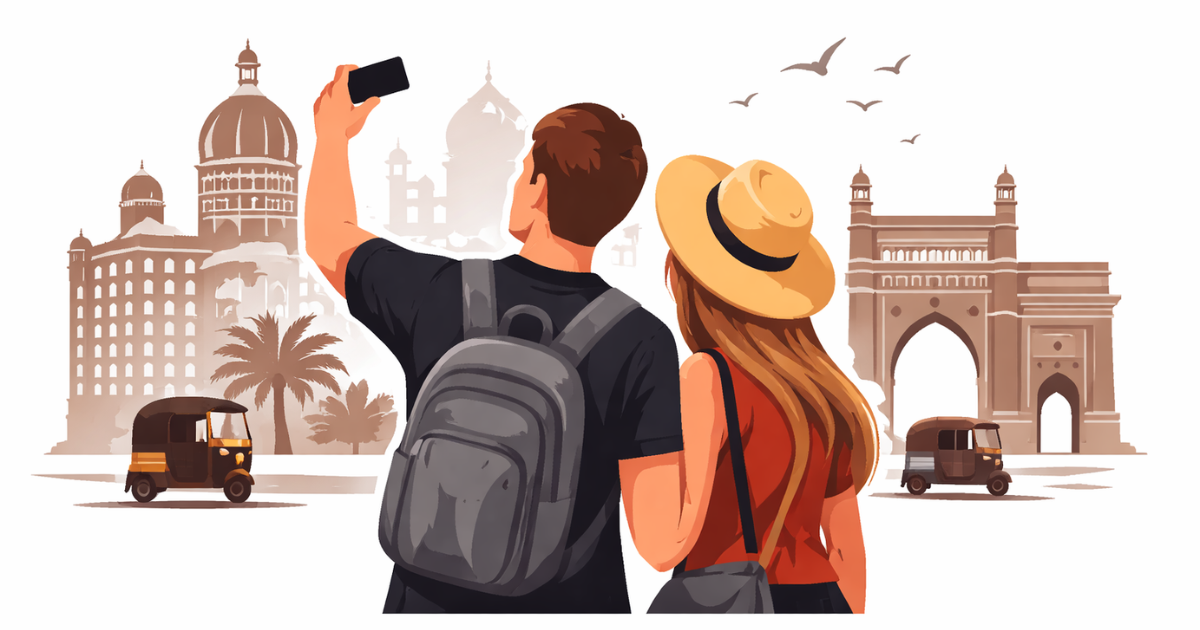
A short video posted by a foreign couple during their visit to Mumbai has sparked a broader conversation about how India is perceived by international travelers. The couple, who document their journeys on social media, candidly admitted that they arrived in India with preconceived notions shaped largely by online commentary and travel forums. Their experience in Mumbai, they said, challenged those assumptions.
In the now widely shared clip, the travelers explained that they had expected to feel overwhelmed or repeatedly hassled in tourist-heavy areas. Instead, they described their interactions as respectful and manageable, noting that they were able to explore popular parts of the city without feeling pressured. The simplicity of their observation—“We were wrong”—resonated across platforms, triggering discussion not only about Mumbai but about India’s global image as a travel destination.
Mumbai, often seen as India’s financial capital and one of its busiest urban centers, is frequently the first point of entry for foreign visitors. The city’s pace, scale and sensory intensity can be daunting for newcomers. Yet it is also home to historic districts, colonial-era architecture, museums, street markets and a dynamic cultural scene that reflects the country’s layered identity. For many travelers, the city presents a concentrated introduction to India’s diversity.
The viral reaction to the couple’s post reveals something significant about modern tourism: perception is increasingly shaped by social media narratives. Travelers today do not rely solely on guidebooks or official tourism campaigns. Instead, short-form videos, candid travel diaries and peer commentary influence destination choices. When a video challenges a dominant narrative—especially one centered on discomfort or safety concerns—it tends to travel quickly.
India’s tourism sector has been steadily rebuilding after the pandemic years. Official figures show a continued recovery in foreign tourist arrivals compared with the immediate post-pandemic period. Industry analysts say that while numbers are improving, perception management remains critical. Countries compete not only on attractions and infrastructure but also on the emotional comfort potential visitors feel before booking a trip.
For decades, India’s global image has oscillated between fascination and apprehension. On one hand, it is celebrated for its heritage sites, culinary traditions, spirituality, and vibrant urban life. On the other, online discourse sometimes amplifies stories of crowding, infrastructure challenges or culture shock. Viral travel content can either reinforce or rebalance those impressions.
The Mumbai video appears to fall into the latter category. Rather than offering a polished promotional montage, the couple framed their experience as a correction of personal bias. They described learning to navigate the city confidently, discovering architectural landmarks and enjoying everyday interactions. Their tone was neither defensive nor promotional; it was observational. That authenticity likely contributed to the clip’s traction.
Travel experts note that firsthand accounts often carry more persuasive weight than formal campaigns. A visitor acknowledging prior skepticism and then describing a positive experience can be more influential than traditional advertising. Such narratives humanize a destination and reduce psychological barriers for those who are curious but uncertain.
At the same time, it is important to recognize the limits of any single experience. India is vast and diverse, and travel conditions vary significantly across regions and contexts. Experiences differ depending on factors such as location, time of year, travel style and personal expectations. A viral video cannot serve as a comprehensive representation of the country. What it can do, however, is introduce nuance into a conversation often dominated by extremes.
The broader shift underway is not about one city alone. It reflects how global audiences process travel information in an era where perception spreads instantly. Positive or negative impressions can circulate worldwide within hours. In that environment, even small, sincere stories can influence how a destination is viewed.
For India, where tourism is intertwined with cultural diplomacy and economic growth, perception carries tangible consequences. A traveler’s willingness to visit affects local businesses, employment and international cultural exchange. When narratives become more balanced—acknowledging both challenges and strengths—they allow potential visitors to make more informed decisions.
The viral Mumbai experience does not erase complex realities, nor does it claim perfection. What it demonstrates is that assumptions formed online can evolve once confronted with lived experience. In a world where digital commentary often precedes real-world engagement, such moments serve as reminders that travel, at its core, remains a personal encounter shaped by openness, context and perspective.
As the debate continues online, the larger takeaway may be less about one couple’s surprise and more about the evolving nature of tourism storytelling. In an interconnected era, perceptions are fluid. And sometimes, a simple admission—“we were wrong”—can travel farther than any guidebook.
Also Read : https://newsproton.com/rapper-flipperachi-announces-india-tour-dates-cities-tickets-and-fans-expectations/
Add newsproton.com as preferred source on google – Click here
Disclaimer: The information presented in this article is intended for general informational purposes only. While every effort is made to ensure accuracy, completeness, and timeliness, data such as prices, market figures, government notifications, weather updates, holiday announcements, and public advisories are subject to change and may vary based on location and official revisions. Readers are strongly encouraged to verify details from relevant official sources before making financial, investment, career, travel, or personal decisions. This publication does not provide financial, investment, legal, or professional advice and shall not be held liable for any losses, damages, or actions taken in reliance on the information provided.
Last Updated on: Friday, February 13, 2026 12:38 pm by News Proton Team | Published by: News Proton Team on Friday, February 13, 2026 12:38 pm | News Categories: Travel