
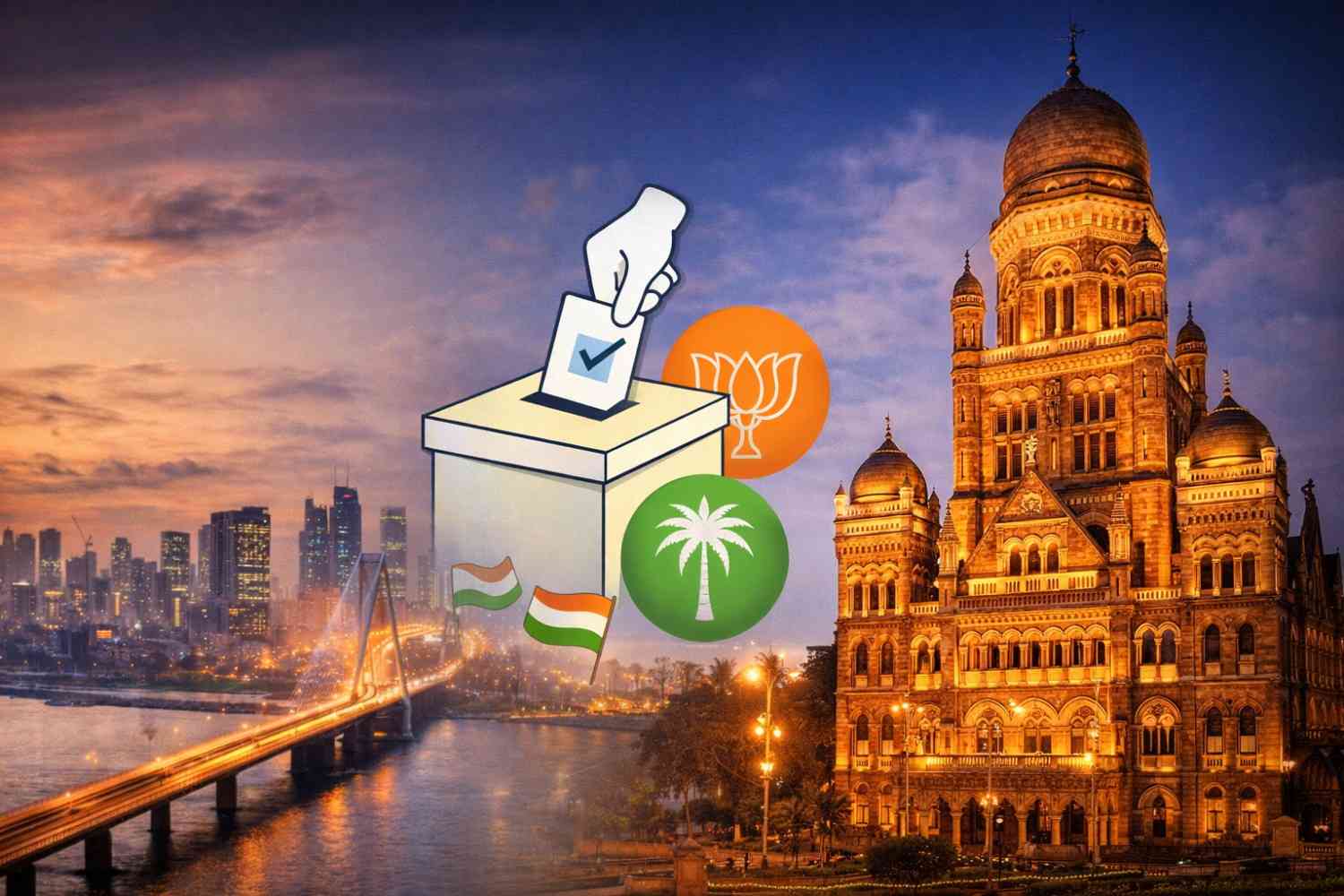
Maharashtra BMC election results are among the most closely watched local political developments in India due to the Brihanmumbai Municipal Corporation’s immense economic, administrative, and political significance. As India’s richest civic body, the BMC plays a central role in governing Mumbai, the country’s financial capital.
Beyond local governance, the outcome of the BMC elections often carries wider political implications, influencing state-level alignments and national political narratives.
Understanding the Importance of the BMC
The Brihanmumbai Municipal Corporation is responsible for managing essential services such as water supply, waste management, roads, public health, education, and disaster response in Mumbai. With one of the largest municipal budgets in Asia, the BMC’s decisions directly affect millions of residents.
This makes Maharashtra BMC election results far more consequential than a routine civic poll.
1. Impact on Urban Governance
One of the most significant factors linked to Maharashtra BMC election results is their impact on Mumbai’s governance model. The party or coalition that controls the BMC gains authority over key infrastructure and civic planning decisions.
Policies related to housing, transport, sanitation, and climate resilience often reflect the priorities of the ruling civic leadership.
2. Political Symbolism Beyond Mumbai
The BMC election is widely seen as a political bellwether in Maharashtra. Control of Mumbai’s civic body provides not only administrative power but also symbolic dominance in the state’s political landscape.
As a result, Maharashtra BMC election results are closely analyzed for clues about shifting voter sentiment and future electoral trends.
3. Role of Alliances and Fragmented Mandates
In recent years, local elections across India have seen increasingly fragmented outcomes. Maharashtra BMC election results are expected to reflect complex political equations shaped by alliances, breakaways, and evolving party identities.
Such outcomes can lead to coalition-based governance, influencing stability and policy continuity within the civic administration.
4. Voter Concerns Driving the Election
Key civic issues often dominate voter decision-making in BMC elections. Concerns such as road quality, flood management during monsoons, affordable housing, and public transport infrastructure remain central.
Maharashtra BMC election results are therefore closely tied to how effectively political parties address these everyday urban challenges.
5. Influence of Leadership and Ground Campaigns
Local leadership plays a crucial role in municipal elections. Ward-level outreach, candidate credibility, and grassroots engagement significantly influence voting behavior.
Rather than national narratives alone, Maharashtra BMC election results often hinge on localized campaigning and visibility at the community level.
6. Economic and Infrastructure Implications
Mumbai’s economic ecosystem depends heavily on efficient civic administration. From maintaining business districts to upgrading transport networks, the BMC’s decisions shape investor confidence and quality of life.
Maharashtra BMC election results can therefore have indirect economic consequences for the city and the state.
7. Administrative Stability and Policy Continuity
The outcome of the BMC elections determines whether existing policies continue or new approaches are introduced. Administrative stability becomes particularly important for long-term infrastructure projects that span multiple years.
Unclear mandates or frequent leadership changes can slow decision-making and implementation.
Public Expectations After the Results
Citizens often expect swift action following Maharashtra BMC election results. Priorities typically include improving civic responsiveness, reducing corruption, and enhancing transparency in municipal operations.
Public scrutiny tends to intensify once electoral promises transition into governance responsibilities.
Challenges Facing the Incoming Civic Leadership
Whoever takes charge of the BMC faces significant challenges, including population pressure, climate-related risks, and infrastructure constraints. Managing Mumbai’s growth while ensuring sustainability remains a demanding task.
Maharashtra BMC election results thus mark the beginning of responsibility rather than the end of political competition.
Maharashtra BMC election results are not just a reflection of local political preferences but a defining moment for Mumbai’s future governance. They influence civic administration, political momentum, and public trust in local institutions.
As the city continues to evolve, the significance of these results lies in how effectively they translate democratic choice into responsive and accountable urban governance.
Also Read: Indian Army Day: 7 Powerful Reasons This Historic Day Inspires the Nation
Follow us on google news: Click Here
Last Updated on: Monday, January 19, 2026 2:11 pm by E Devanshi Varma | Published by: E Devanshi Varma on Saturday, January 17, 2026 10:51 am | News Categories: News