
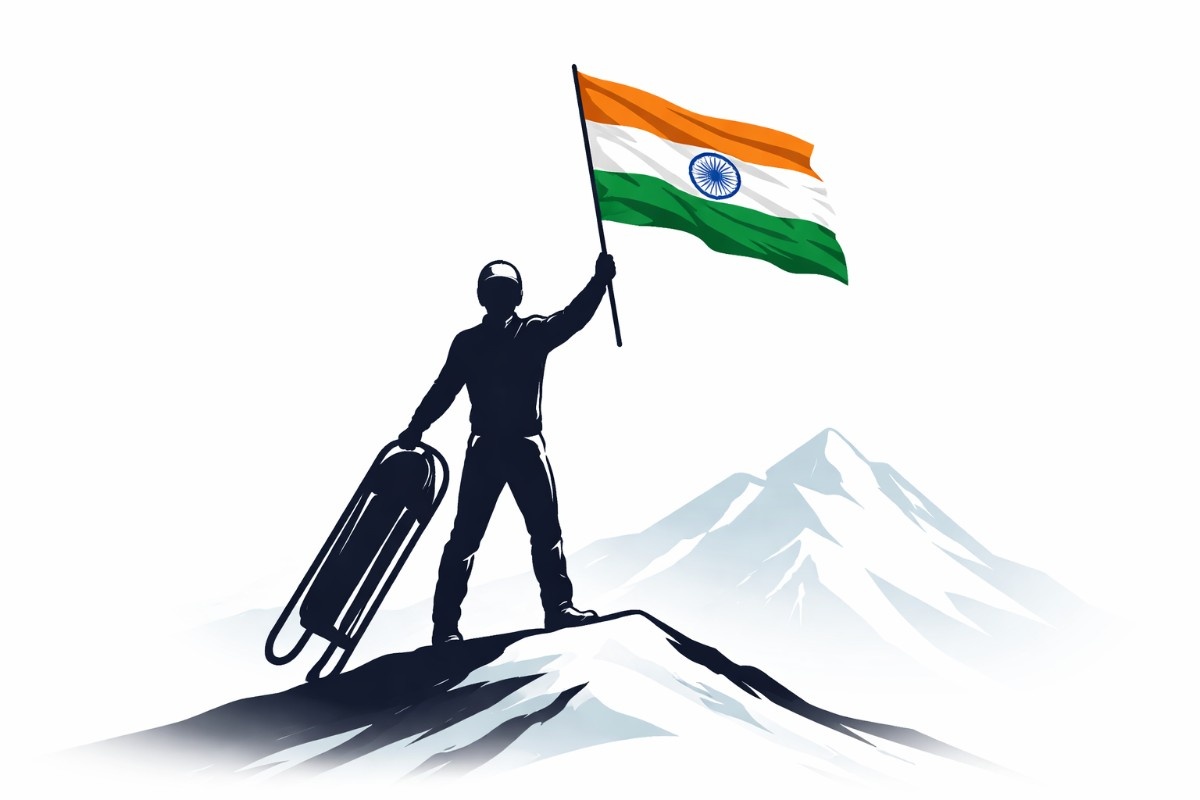
In a country where cricket dominates the sporting imagination and Olympic glory is often associated with summer disciplines, winter sports have traditionally remained on the margins. Yet, as interest in snow-based events gradually expands across India’s northern states, the role of trailblazers like Shiva Keshavan is once again in focus. A six-time Winter Olympian and one of India’s most enduring sporting pioneers, Keshavan’s journey continues to shape the narrative of winter sports in the country at a time when the discipline is slowly gaining broader recognition.
Born in Manali, Himachal Pradesh, in 1981, Keshavan was introduced to winter sport at a young age in the Himalayan terrain. At just 16, he made history by becoming the youngest athlete to compete in the luge event at the Winter Olympics when he represented India at the 1998 Winter Olympics. His qualification alone was remarkable, considering the near absence of formal winter sports infrastructure in India at the time. Competing in a sport largely unfamiliar to Indian audiences, he embarked on what would become a two-decade Olympic journey.
Over the course of his career, Keshavan represented India at six consecutive Winter Games — Nagano 1998, Salt Lake City 2002, Turin 2006, Vancouver 2010, Sochi 2014 and PyeongChang 2018. His highest Olympic finish came in 2010, when he secured a top-25 result in men’s singles luge, a significant achievement given the dominance of European nations in the sport. Beyond placements, his career was defined by perseverance. Training abroad, often relying on limited funding, and competing with equipment that did not always match international standards, Keshavan became a symbol of determination in the face of systemic challenges.
His accomplishments extend beyond Olympic participation. Keshavan has won multiple medals at the Asian Luge Championships and set an Asian speed record in luge, underlining his stature within the continent. However, his influence has grown even more in his post-competitive career. After retiring from active competition, he shifted focus toward administration, advocacy and athlete development, working to create pathways for Indian winter athletes who once faced the same structural obstacles he did.
In recent years, Keshavan has also taken on international responsibilities, contributing to the global development of winter sport disciplines. His involvement with ski mountaineering — a sport set to make its Olympic debut at the 2026 Winter Olympics in Milan-Cortina — has drawn renewed attention to his evolving Olympic role. As ski mountaineering enters the Olympic program, India’s presence in winter sports governance through figures like Keshavan signals a broader shift from participation alone to active engagement in shaping the sport’s future.
Meanwhile, winter sports in India are witnessing gradual momentum. Events such as the Khelo India Winter Games, hosted in destinations like Gulmarg and Leh, have created competitive platforms for young athletes. Increased media coverage and institutional recognition are encouraging more participation in skiing, snowboarding and other snow disciplines. At the international level, athletes like Arif Khan have carried the torch forward. Khan made history at the 2022 Winter Olympics by becoming the first Indian to compete in two alpine skiing events at a single Winter Games, underscoring the expanding footprint of Indian athletes in snow sports.
Despite these encouraging developments, structural limitations remain significant. India still lacks dedicated sliding tracks for sports such as luge, bobsleigh and skeleton. Training facilities are limited, and athletes often depend on foreign exposure for elite preparation. Funding constraints and the absence of widespread winter sports culture continue to slow progress. Yet, compared to the landscape that existed when Keshavan first competed in 1998, the ecosystem today shows measurable improvement.
Climate and geography offer India natural advantages in regions like Jammu and Kashmir, Himachal Pradesh and Uttarakhand. Harnessing this potential requires sustained investment in infrastructure, coaching, and long-term athlete development programs. Experts argue that winter sports growth must be tied to grassroots identification and consistent international competition exposure if India hopes to translate participation into podium finishes.
Keshavan himself has consistently advocated for strategic development rather than symbolic representation. He has spoken about the importance of building a system where athletes are not isolated pioneers but part of a structured pathway from grassroots to elite competition. His own journey — from a teenage Olympian navigating unfamiliar ice tracks to a respected voice in international winter sport circles — reflects both the challenges and possibilities of India’s winter sporting ambitions.
As the world prepares for the 2026 Winter Olympics, India’s winter sports narrative stands at a subtle but meaningful crossroads. While medal prospects remain an aspiration rather than an expectation, the conversation has shifted from mere qualification to long-term capability building. In that evolving story, Shiva Keshavan remains both a symbol of what has been achieved and a reminder of what remains to be done.
The traction winter sports are gaining in India may still be modest compared to traditional sporting giants, but the foundation is firmer than ever before. If sustained support follows emerging interest, the coming decade could mark a defining phase. For now, Keshavan’s Olympic legacy continues to illuminate the path, proving that even in a tropical nation, the pursuit of excellence can find its place on ice and snow.
Also Read : https://newsproton.com/2026-fashion-forecast-key-trends-indians-are-searching-for-this-season/
Add newsproton.com as preferred source on google – Click here
Disclaimer: The information presented in this article is intended for general informational purposes only. While every effort is made to ensure accuracy, completeness, and timeliness, data such as prices, market figures, government notifications, weather updates, holiday announcements, and public advisories are subject to change and may vary based on location and official revisions. Readers are strongly encouraged to verify details from relevant official sources before making financial, investment, career, travel, or personal decisions. This publication does not provide financial, investment, legal, or professional advice and shall not be held liable for any losses, damages, or actions taken in reliance on the information provided.
Edited by Madhusudhan Reddy
Last Updated on: Wednesday, February 25, 2026 11:12 am by News Proton Team | Published by: News Proton Team on Wednesday, February 25, 2026 11:11 am | News Categories: Sports