
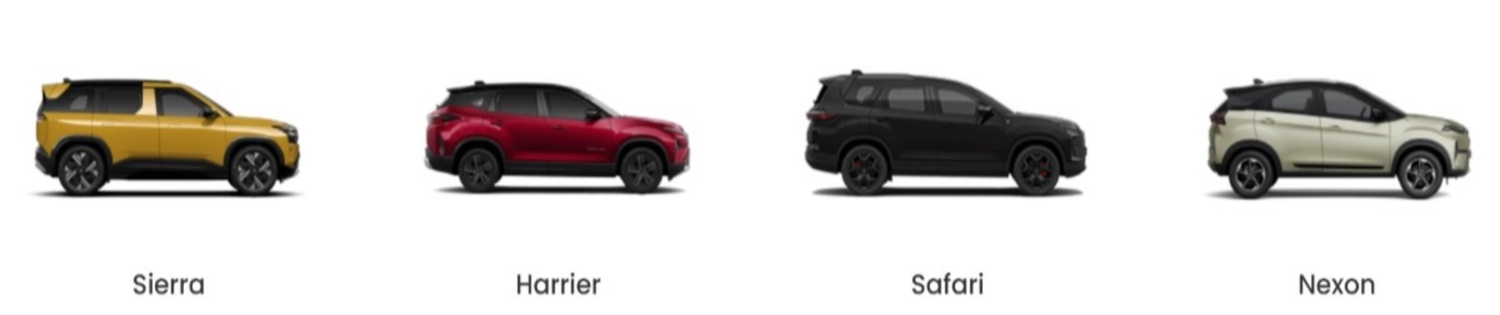
In a move that reflects persistent cost pressures across India’s automobile sector, Tata Motors has announced a price hike across its passenger vehicle range, with revised prices set to take effect from April 1, 2026. The company said the decision has been taken to partially offset the sustained increase in input costs, including raw materials and overall operational expenses.
The automaker indicated that the hike will apply primarily to its internal combustion engine portfolio, with a weighted average increase of around 0.5%. While the overall percentage appears modest, the actual impact will vary depending on the model and variant, meaning customers could see different price adjustments across the lineup. Industry observers note that even marginal increases can translate into noticeable differences in final on-road costs when combined with taxes, insurance and registration charges.
The development comes at a time when automobile manufacturers are grappling with fluctuating prices of key commodities such as steel and aluminium, alongside broader supply chain challenges. Rising logistics costs and currency fluctuations have further added to the burden, prompting companies like Tata Motors to recalibrate pricing strategies to protect margins while maintaining product quality.
Popular models in the company’s portfolio, including the Tiago, Tigor, Altroz, Punch, Nexon, Harrier and Safari, are expected to be affected by the revision, although specific model-wise price increases have not been disclosed. Market estimates suggest that entry-level vehicles may see an increase of a few thousand rupees, while higher-end SUVs could witness relatively higher adjustments depending on features and variants.
Notably, the price hike is expected to be limited to conventional petrol and diesel vehicles, with the company’s electric vehicle portfolio remaining unaffected for now. This approach aligns with Tata Motors’ broader strategy of encouraging electric mobility adoption in India by keeping EV pricing competitive in comparison to traditional fuel-powered cars.
The announcement follows a wider industry trend, with several carmakers either implementing or planning similar price hikes in response to escalating production costs. Analysts believe such revisions are becoming increasingly inevitable as manufacturers seek to balance profitability with consumer demand in a highly competitive market.
For prospective buyers, the timing of the hike means that those planning a purchase may have to bear slightly higher costs starting April. While the increase is not steep in percentage terms, it adds to the cumulative ownership expense, particularly in a price-sensitive market like India.
Despite the adjustment, Tata Motors continues to hold a strong position in the domestic passenger vehicle segment, driven by a diverse product portfolio and growing consumer trust. The latest price revision underscores the broader reality facing the automotive industry, where rising input costs are gradually translating into higher prices for end consumers.
Also Read : https://newsproton.com/apple-2026-lineup-iphone18-pro-m5-macs-foldable/
Edited by Madhusudhan Reddy
Last Updated on: Tuesday, March 31, 2026 12:31 pm by Madhusudhan Reddy | Published by: Madhusudhan Reddy on Tuesday, March 31, 2026 12:31 pm | News Categories: Automobile