
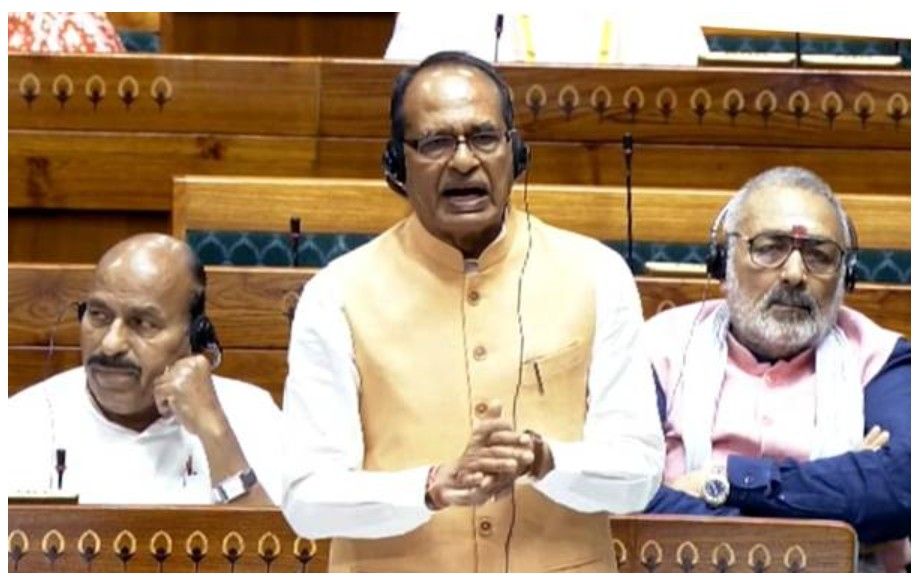
Union Minister for Agriculture and Farmers’ Welfare and Rural Development, Shri Shivraj Singh Chouhan, on Tuesday outlined a series of government initiatives aimed at enhancing farmers’ income, reducing risks, and promoting sustainable agricultural practices. Addressing the Lok Sabha, the Minister emphasized the Centre’s focus on encouraging farmers to transition from tobacco cultivation to more profitable and less harmful cash crops.
Chouhan stated that the government has identified a range of viable alternatives in regions traditionally dependent on tobacco farming. These include hybrid maize, chilli, sweet potato, cotton, potato, chia, feed beans, cowpea, ragi, red gram, sugarcane, soybean, sorghum, and groundnut. The move is intended to ensure stable cash income for farmers while discouraging dependence on crops with adverse health and environmental impacts.
Highlighting the challenges faced by small and marginal farmers, the Minister noted that reliance on a single crop often exposes them to financial risks. To address this, the government has developed integrated farming models that combine multiple agricultural and allied activities. These include cultivation of cereals like wheat and paddy, along with vegetables, fruits, livestock rearing, fisheries, beekeeping, goat farming, and agro-forestry. Such diversified models, he said, are being demonstrated across various states to help farmers achieve steady and higher year-round income.
Chouhan also underscored the government’s efforts to ensure fair pricing through Minimum Support Price (MSP) mechanisms. He said that MSP for major crops, including wheat, paddy, pulses, and oilseeds, has been increased, with procurement at historic levels in the current season. Notably, arrangements have been strengthened for pulses such as tur, masoor, and urad, allowing registered farmers to sell their entire produce to government agencies.
On crop insurance, the Minister described recent reforms under the Pradhan Mantri Fasal Bima Yojana as “transformational.” He pointed out that earlier delays in claim settlements had been a major concern for farmers. Under the revised system, insurance companies are now required to settle claims within 21 days of yield data availability. In case of delays, both insurers and state governments must pay compensation along with 12 percent interest. Importantly, the revised norms also ensure that even individual farmers affected by crop loss are eligible for compensation.
Reaffirming the government’s commitment to transparency and accountability, Chouhan cited Prime Minister Narendra Modi’s stance against corruption. He said that complaints received through digital platforms, including the Krishi Rakshak portal, are being closely monitored and acted upon, with strict measures taken against any irregularities.
The Minister further highlighted the use of Direct Benefit Transfer (DBT) to ensure timely and transparent disbursal of funds. He noted that in states like Rajasthan, thousands of crores of rupees have been directly credited to farmers’ bank accounts under crop insurance schemes in recent years.
Summing up the government’s approach, Chouhan said the combined impact of these initiatives is aimed at building a resilient agricultural ecosystem where farmers are assured better incomes, reduced risks, and greater financial security.
Last Updated on: Tuesday, March 17, 2026 5:22 pm by Madhusudhan Reddy | Published by: Madhusudhan Reddy on Tuesday, March 17, 2026 5:22 pm | News Categories: Bengaluru