
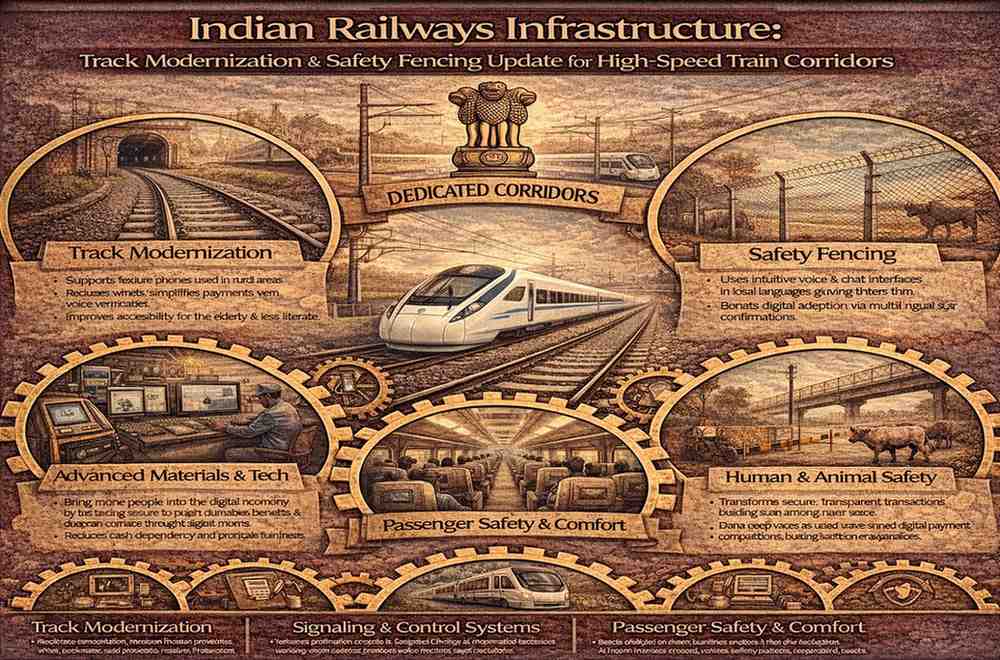
India’s railway network is undergoing one of the most ambitious infrastructure upgrades in its history, driven by the twin goals of higher speeds and enhanced passenger safety. As the country prepares for faster trains and modern mobility corridors, track modernisation and safety fencing have emerged as critical focus areas. These upgrades are not just technical improvements; they represent a strategic shift in how rail transport is planned, operated, and safeguarded for the future.
Why Infrastructure Modernisation Is a Priority Now
Rising passenger demand, increasing freight movement, and the introduction of high-speed and semi-high-speed trains have placed new pressures on existing railway infrastructure. Traditional tracks and safety systems, designed for lower speeds, are no longer adequate to support next-generation rail operations.
For Indian Railways, modernisation is essential to improve punctuality, reduce maintenance-related disruptions, and meet international safety benchmarks. Track upgrades and fencing solutions are being accelerated to ensure that higher speeds do not compromise operational reliability or passenger security.
Track Modernisation for High-Speed Corridors
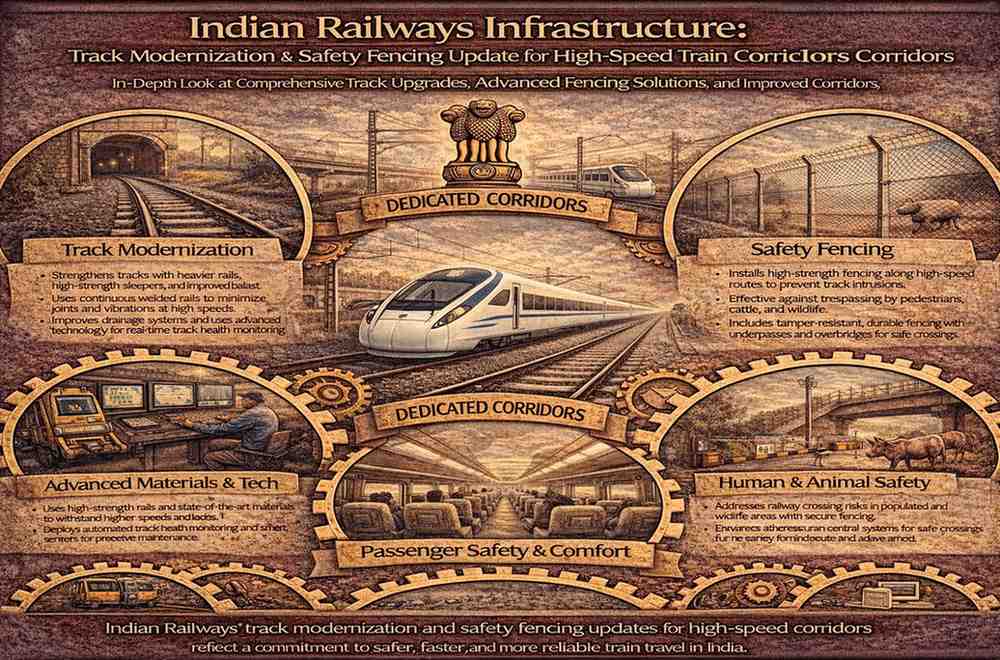
Track modernisation lies at the heart of India’s high-speed rail ambitions. Conventional tracks are being replaced or strengthened with heavier rails, improved sleepers, and advanced fastening systems capable of handling higher axle loads and speeds.
Continuous welded rails are increasingly being used to minimise joints, reduce vibration, and improve ride comfort. Enhanced ballast systems and improved drainage are also part of the upgrade, ensuring track stability even under extreme weather conditions. These measures are particularly critical for corridors earmarked for high-speed and semi-high-speed services.
Use of Advanced Materials and Technology
Modernisation efforts now rely heavily on advanced materials and digital monitoring tools. High-strength rails, pre-stressed concrete sleepers, and elastic fastenings are being deployed to extend track life and reduce wear and tear.
Track health monitoring systems, including sensors and automated inspection vehicles, allow real-time assessment of rail conditions. This data-driven approach enables predictive maintenance, helping prevent failures before they occur and reducing the risk of speed-related incidents.
Dedicated Corridors and Speed Segregation
One of the key infrastructure strategies is the segregation of traffic. High-speed and semi-high-speed trains require dedicated or prioritised corridors to maintain consistent speeds and safety standards.
By separating fast passenger trains from slower passenger and freight services, Indian Railways aims to reduce congestion and operational conflicts. This segregation also allows for more precise safety planning, including fencing and controlled access along high-speed stretches.
Safety Fencing as a Critical Layer of Protection
Safety fencing has become a central component of high-speed corridor design. At higher speeds, even minor intrusions on tracks can have serious consequences. Fencing is therefore being installed along vulnerable stretches to prevent trespassing by people and animals.
Modern fencing solutions are designed to be durable, tamper-resistant, and suitable for diverse terrain. In rural and semi-urban areas, fencing plays a crucial role in preventing accidental crossings, which have historically been a major safety concern.
Addressing Human and Animal Intrusion Risks
India’s railway network passes through densely populated regions as well as wildlife corridors. Track intrusions by pedestrians, cattle, and wild animals have long posed safety risks.
The fencing strategy for high-speed corridors takes these realities into account. In addition to physical barriers, measures such as underpasses, overbridges, and designated crossings are being developed to ensure mobility for local communities and wildlife without compromising rail safety.
Integration With Signalling and Control Systems
Track modernisation and fencing upgrades are being aligned with improvements in signalling and train control systems. Advanced signalling allows trains to operate safely at higher speeds with shorter headways, while fencing ensures that the physical track environment remains secure.
This integrated approach reduces dependence on manual interventions and enhances overall system resilience. Together, these upgrades support safer, faster, and more predictable train operations.
Impact on Passenger Safety and Experience
For passengers, infrastructure upgrades translate into smoother rides, reduced travel times, and greater confidence in safety. Modern tracks reduce noise and vibration, while secure corridors minimise the risk of sudden stoppages caused by track intrusions.
As high-speed services expand, consistent infrastructure standards will be key to building public trust. Safety fencing, though often unnoticed by passengers, plays a vital behind-the-scenes role in ensuring uninterrupted journeys.
Challenges in Implementation
Despite progress, implementing large-scale track modernisation and fencing across a vast network is not without challenges. Land acquisition, coordination with state authorities, and adapting designs to varied geography can slow execution.
Maintenance is another concern. Fencing systems require regular inspection and repair to remain effective. Ensuring long-term upkeep will be as important as initial installation, particularly in remote or high-traffic areas.
Role of Policy and Long-Term Planning
Infrastructure upgrades are guided by long-term planning frameworks and safety policies shaped by Indian Railways and the Ministry of Railways. Investment decisions increasingly prioritise corridors with high passenger density and strategic importance.
These upgrades also align with India’s broader mobility and infrastructure goals, including reduced carbon emissions and improved intercity connectivity. High-speed rail is seen not just as a transport upgrade but as an economic catalyst.
What This Means for the Future of Rail Travel
Track modernisation and safety fencing are foundational to India’s vision of a faster, safer railway system. As more corridors are upgraded, the network will be better equipped to handle advanced trains and higher traffic volumes.
For commuters and long-distance travellers alike, these changes promise a new standard of rail travel—one that balances speed with safety and reliability. For the rail system, they represent a decisive step toward global best practices.
The Road Ahead
Indian Railways infrastructure upgrades are reshaping how rail travel will look in the coming decades. Track modernisation and safety fencing updates for high-speed train corridors reflect a proactive approach to managing growth and risk simultaneously.
As projects progress, their success will depend on consistent execution, effective maintenance, and community engagement. The transformation underway is complex, but its impact is clear: a stronger, safer, and more future-ready railway network for India.
Add newsproton.com as preferred source on google – click here
Last Updated on: Wednesday, January 28, 2026 1:34 pm by News Proton Team | Published by: News Proton Team on Wednesday, January 28, 2026 1:34 pm | News Categories: India