
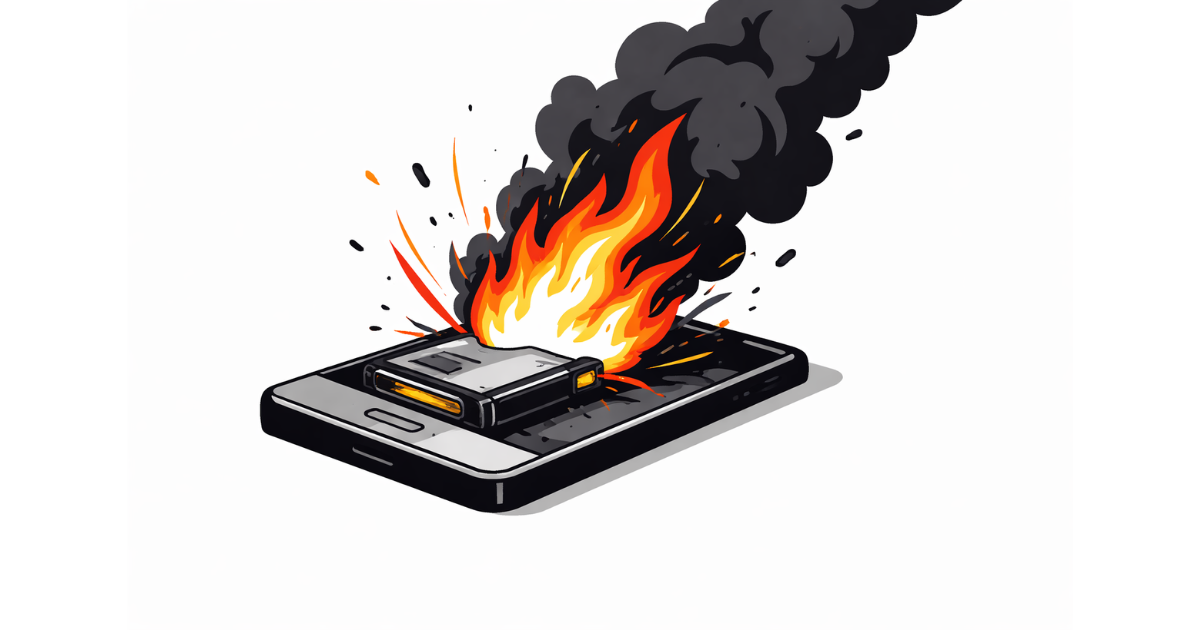
A widely circulated video showing a mobile phone battery exploding has triggered renewed concern about battery safety, pushing the issue into mainstream public discussion across technology, automotive, and consumer safety communities. The footage, which has spread rapidly on social media platforms, captures a moment when a loose smartphone battery suddenly combusts after being mishandled, causing panic and injuries. While such incidents are rare, the graphic nature of the video has served as a stark reminder of the risks associated with improper handling of lithium-ion batteries, which power billions of devices worldwide.
The incident has drawn attention not only because of its shock value but also because it highlights a gap in everyday consumer awareness. Lithium-ion batteries are deeply embedded in modern life, found in smartphones, laptops, power banks, electric scooters, and electric vehicles. For most users, these batteries are invisible components that quietly do their job. The viral video disrupts that sense of familiarity, revealing how dangerous these energy-dense power sources can become when damaged, exposed, or misused.
Battery experts explain that lithium-ion batteries store large amounts of energy in a compact form. Under normal use, safety circuits and protective casings keep that energy stable. However, if a battery is punctured, crushed, overheated, or otherwise compromised, it can trigger a phenomenon known as thermal runaway. In such cases, internal temperatures rise rapidly, leading to the release of flammable gases, fire, or explosion. This risk increases dramatically when batteries are removed from devices, handled loosely, or exposed to physical stress.
The viral clip has reignited comparisons with earlier high-profile battery safety incidents in the technology sector. Over the past decade, recalls involving smartphones, power banks, and other electronic accessories have underscored how manufacturing defects or design flaws can turn everyday gadgets into fire hazards. Regulators and manufacturers responded to those episodes by tightening safety standards, improving battery testing, and redesigning charging systems. Despite these advances, experts note that consumer behavior remains a critical factor in preventing accidents.
What has made the recent video resonate so strongly is its crossover impact beyond consumer electronics. Automotive communities, particularly those focused on electric vehicles, have joined the conversation, emphasizing that battery safety is a shared concern across industries. Electric vehicles rely on much larger battery packs, but they are designed with multiple layers of protection, cooling systems, and monitoring software to reduce the risk of fires. Industry specialists point out that while EV battery incidents receive outsized attention, statistically they remain uncommon compared to the scale of adoption. Still, the viral phone battery explosion has reminded the public that the underlying chemistry is similar, making responsible handling essential at every level.
Consumer safety advocates say the incident should be viewed as an educational moment rather than a source of fear. They stress that lithium-ion batteries are generally safe when used as intended, but can become hazardous when treated casually. Loose batteries should never be played with, damaged batteries should not be stored or reused, and uncertified chargers or replacement batteries can increase the risk of overheating. Parents and guardians, in particular, are being urged to keep spare batteries and electronic components out of reach of children.
The broader response from the tech industry has focused on reinforcing existing safety guidance rather than introducing new warnings. Manufacturers continue to advise consumers to avoid extreme temperatures, stop using devices that show signs of swelling or overheating, and follow recommended charging practices. Recycling and proper disposal have also emerged as key themes, as discarded batteries can pose fire risks during transport and waste processing if not handled correctly.
As the video continues to circulate, its long-term impact may lie in how it reshapes everyday attitudes toward battery safety. Public discussions sparked by viral content often fade quickly, but experts hope this moment will lead to more lasting awareness. With global reliance on rechargeable batteries only set to increase, especially as electric mobility and portable electronics expand, understanding the risks and responsibilities associated with these power sources has become increasingly important.
The phone battery explosion captured on camera is an extreme example, but it underscores a simple reality: modern batteries are powerful pieces of technology that deserve careful handling. The attention generated by the incident has brought battery safety out of technical manuals and into public conversation, reminding consumers that small actions, such as proper storage and cautious use, can play a significant role in preventing serious accidents.
Disclaimer: The information presented in this article is intended for general informational purposes only. While every effort is made to ensure accuracy, completeness, and timeliness, data such as prices, market figures, government notifications, weather updates, holiday announcements, and public advisories are subject to change and may vary based on location and official revisions. Readers are strongly encouraged to verify details from relevant official sources before making financial, investment, career, travel, or personal decisions. This publication does not provide financial, investment, legal, or professional advice and shall not be held liable for any losses, damages, or actions taken in reliance on the information provided.
Last Updated on: Tuesday, February 10, 2026 10:40 am by News Proton Team | Published by: News Proton Team on Tuesday, February 10, 2026 10:40 am | News Categories: Technology