
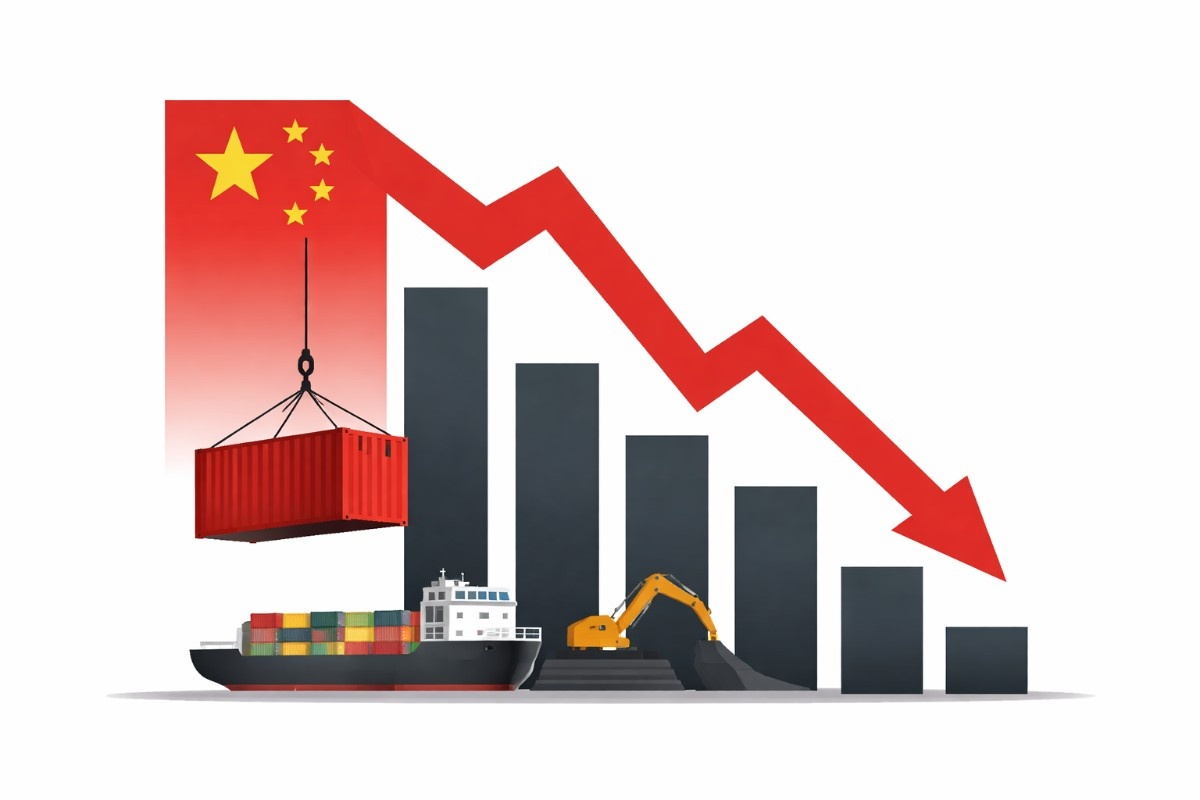
China’s economic momentum has slowed in 2026, prompting economists, policymakers, and global investors to reassess the outlook for international trade and economic stability. As the world’s second-largest economy and a central hub of global manufacturing, China’s growth trajectory plays a critical role in shaping trade flows, commodity markets, and supply chains across continents. The emerging signs of slower expansion have therefore raised important questions about how global trade will evolve in the coming years.
Chinese authorities have signaled a more cautious approach to economic growth, setting a target that reflects the country’s shifting priorities and the challenges facing its domestic economy. After decades of rapid expansion that frequently exceeded growth rates of seven percent or more, China is now entering a period characterized by more moderate but potentially more sustainable growth. The government’s economic strategy increasingly emphasizes structural reform, technological innovation, and domestic consumption rather than the investment-driven model that powered its earlier economic rise.
One of the most significant factors contributing to the slowdown is the prolonged adjustment in China’s property sector. For many years, real estate development played a central role in the country’s economic growth, driving investment, employment, and local government revenue. However, tighter regulations, declining property sales, and financial pressures on major developers have reduced activity across the sector. The impact of this slowdown has extended beyond construction, influencing industries such as steel, cement, and home furnishings while also affecting consumer confidence.
Domestic demand has also shown signs of weakness. Although China continues to possess one of the largest consumer markets in the world, household spending has recovered more gradually than expected following earlier economic disruptions. Analysts suggest that uncertainty about employment prospects and income growth has encouraged many households to maintain higher levels of savings rather than increase spending. This cautious approach among consumers has made it more difficult for domestic demand to fully compensate for slower investment growth.
At the same time, China’s export sector is navigating a more complex global environment. Trade tensions, shifting geopolitical alliances, and efforts by multinational companies to diversify supply chains have gradually altered the structure of international manufacturing networks. Several global companies have adopted a strategy often referred to as “China plus one,” expanding production capacity in countries such as India, Vietnam, and Indonesia while maintaining a presence in China. This shift reflects a broader trend toward supply chain resilience and risk diversification.
Because China is one of the largest importers of raw materials and industrial components, changes in its economic growth can significantly influence global markets. Slower expansion in Chinese manufacturing and construction can reduce demand for commodities such as iron ore, copper, and energy resources. This in turn affects exporting countries across Asia, Africa, and Latin America whose economies rely heavily on supplying these materials. For many of these nations, China remains their largest trading partner, making its economic performance closely tied to their own growth prospects.
Financial markets have also reacted to the evolving economic outlook. Investors are closely monitoring Chinese economic indicators, including industrial production, retail sales, and investment trends, for signals about future growth. Fluctuations in Chinese stock markets and currency movements have reflected broader uncertainty about the pace of economic recovery and the effectiveness of policy measures designed to support growth.
Despite these challenges, Chinese policymakers have emphasized that the country’s economic transformation is part of a deliberate long-term strategy rather than a temporary crisis. The government has increasingly focused on developing advanced manufacturing sectors, digital technologies, renewable energy, and electric vehicles. These industries are expected to play a major role in China’s future economic expansion and global competitiveness. By investing heavily in research, innovation, and infrastructure for emerging technologies, China aims to move further up the global value chain.
Another key component of the government’s strategy is encouraging greater domestic consumption. Economic planners have recognized that long-term stability requires reducing reliance on exports and investment while strengthening household spending. Policies aimed at improving social security systems, increasing wages, and expanding urbanization are intended to gradually shift the economy toward a consumption-driven model.
The broader global economic environment adds further complexity to China’s transition. International trade growth has slowed compared with the rapid expansion seen during earlier decades of globalization. Rising geopolitical tensions, protectionist policies in some regions, and the restructuring of supply chains have contributed to a more fragmented trade landscape. As a result, global businesses are adapting to new patterns of production and distribution.
For many emerging economies, China’s economic shift presents both risks and opportunities. Reduced Chinese demand could affect exporters that rely heavily on selling commodities and industrial inputs to Chinese manufacturers. At the same time, the diversification of supply chains may attract new investments to other manufacturing centers in Asia and beyond, potentially reshaping the geography of global production.
Even with slower growth rates, China is expected to remain one of the largest contributors to global economic expansion due to the sheer size of its economy. A moderate growth rate in China still represents a significant addition to global output each year. For this reason, developments in China’s economic policy and performance will continue to be closely watched by governments, businesses, and financial institutions worldwide.
The key question facing the international community in 2026 is not simply whether China’s economy is slowing, but how successfully it can manage its transition toward a more balanced and sustainable model of development. The outcome of this transition will influence global trade dynamics, technological competition, and economic cooperation for years to come. As China navigates these changes, its economic direction will remain one of the most important factors shaping the future of the global economy.
Disclaimer: The information presented in this article is intended for general informational purposes only. While every effort is made to ensure accuracy, completeness, and timeliness, data such as prices, market figures, government notifications, weather updates, holiday announcements, and public advisories are subject to change and may vary based on location and official revisions. Readers are strongly encouraged to verify details from relevant official sources before making financial, investment, career, travel, or personal decisions. This publication does not provide financial, investment, legal, or professional advice and shall not be held liable for any losses, damages, or actions taken in reliance on the information provided.
Edited by Madhusudhan Reddy
Last Updated on: Friday, March 6, 2026 3:21 pm by News Proton Team | Published by: News Proton Team on Friday, March 6, 2026 3:21 pm | News Categories: Business