
Explosions in central Iran and attacks across Iraq and Lebanon heighten fears of a broader Middle East conflict
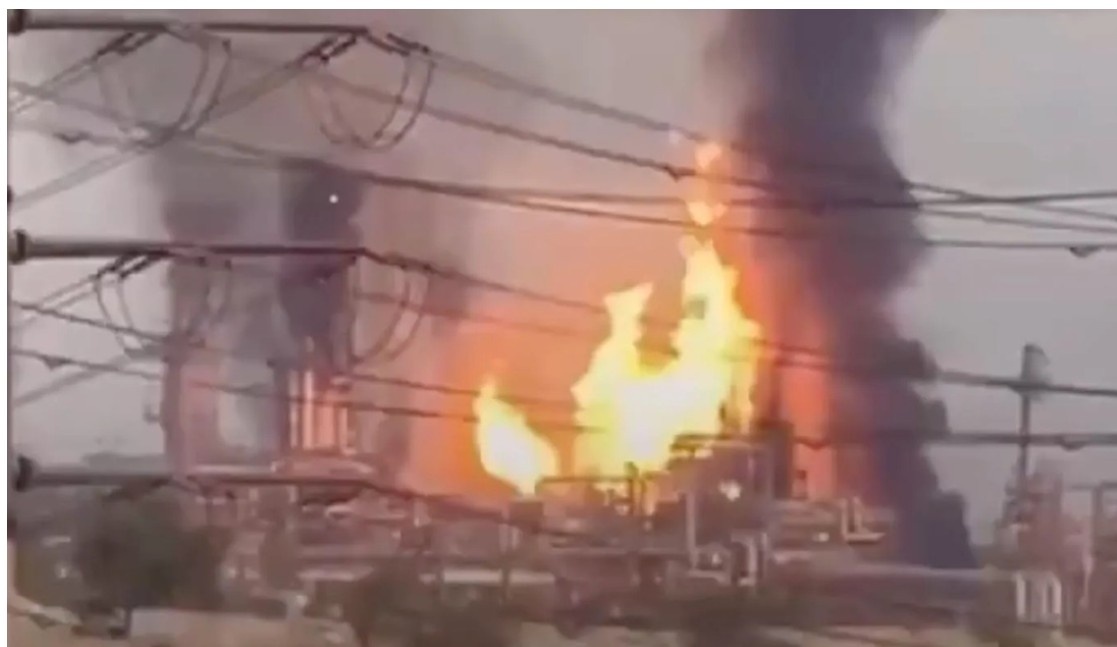
Tehran/Kuwait City/Beirut/Baghdad, March 31: A series of coordinated military strikes attributed to the United States and Israel struck Iran’s central city of Isfahan early Tuesday, triggering multiple explosions and raising concerns about a widening regional conflict. The strikes reportedly targeted key military and industrial sites, including the strategically significant Badr airbase, with eyewitnesses describing powerful blasts that lit up the sky through the early hours.
Isfahan, one of Iran’s largest and most important cities, is a major industrial hub and lies near critical infrastructure such as the Natanz nuclear facility, making it a sensitive location in the country’s defense and nuclear network. Eyewitness videos circulating in regional media showed plumes of smoke and flashes from multiple impact points, though Iranian authorities have not yet released official details on casualties or the extent of the damage.
The escalation extended beyond Iran’s borders, underscoring the growing volatility across the region. The Kuwait Petroleum Corporation reported that an Iranian strike ignited a fire on the Al-Salmi oil tanker docked at Dubai Port, raising concerns about a possible oil spill and its environmental and economic impact. Emergency response efforts were said to be underway to contain the blaze and prevent further damage.
In southern Lebanon, the Iran-backed group Hezbollah claimed it had launched drone attacks on an Israeli outpost in Misgav Am and destroyed a Merkava tank with a guided missile in clashes along the border. Meanwhile, in Iraq, the Popular Mobilization Forces reported that US and Israeli airstrikes targeted its positions in Babil province’s Jurf al-Nasr area and in Al-Karma in Anbar, alleging that multiple brigades were struck. Authorities in the Kurdistan region also said attempted attacks near Sulaymaniyah were intercepted.
There has been no immediate official confirmation or detailed response from Washington or Tel Aviv regarding the reported strikes, while Iranian officials have so far issued limited statements acknowledging hostile activity. The lack of clarity has added to uncertainty as the situation unfolds rapidly across multiple fronts.
The developments come against a backdrop of escalating tensions between Iran and Israel, with the United States increasingly involved in regional security dynamics. Isfahan’s strategic importance, due to its proximity to military production facilities and nuclear-related sites, has long made it a focal point in any confrontation involving Iran. The expansion of hostilities into Iraq, Lebanon, and the Gulf highlights the risk of a broader regional escalation involving multiple state and non-state actors.
The potential impact of these developments extends beyond immediate security concerns, particularly with the tanker fire in Dubai raising fears about disruptions to global oil supplies and environmental damage. Analysts warn that continued strikes and retaliatory actions could further destabilize the region, affecting civilian populations and critical infrastructure.
As tensions remain high, attention is now focused on whether diplomatic efforts can prevent further escalation or whether the conflict will deepen in the coming days, with significant implications for regional stability and international markets.
Input & Images : Hindusthan Samachar
Edited by Madhusudhan Reddy
Last Updated on: Tuesday, March 31, 2026 11:48 am by Madhusudhan Reddy | Published by: Madhusudhan Reddy on Tuesday, March 31, 2026 11:48 am | News Categories: Trending