
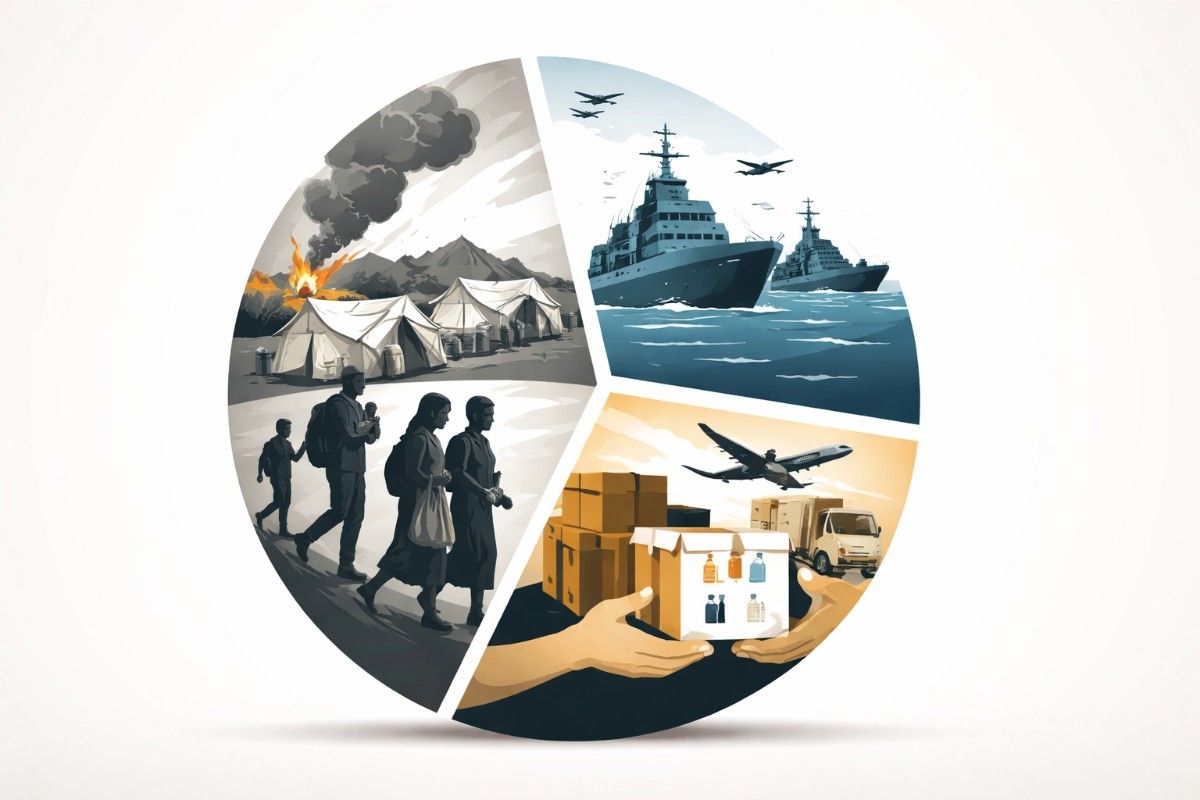
The international landscape in early 2026 reflects a world grappling with overlapping crises and strategic recalibrations. From escalating tensions in East Africa to maritime diplomacy in the Indo-Pacific and evolving patterns in global humanitarian funding, recent developments underscore the interconnected nature of security, diplomacy and aid.
South Sudan Faces Renewed Instability Amid Fragile Peace
Nearly fifteen years after gaining independence in 2011, South Sudan remains mired in instability. Despite the 2018 Revitalized Peace Agreement that formally ended years of civil war between forces loyal to President Salva Kiir and those aligned with Vice President Riek Machar, the country’s political settlement has remained fragile.
In recent months, renewed violence in parts of the country, including Jonglei State, has heightened concerns of localized clashes escalating into broader unrest. Reports from United Nations officials have highlighted rising tensions between armed groups and government-aligned forces, as well as the continued presence of heavily armed militias. The situation has resulted in civilian casualties and new waves of displacement in regions already burdened by years of conflict.
According to United Nations humanitarian agencies, millions of South Sudanese continue to require assistance. The country faces one of the world’s most severe food security crises, driven by a combination of conflict, climate shocks such as flooding, economic instability and weak infrastructure. The World Food Programme and other agencies have repeatedly warned that large segments of the population face acute food insecurity, with women and children particularly vulnerable.
Humanitarian access remains a persistent challenge. Aid organizations have reported logistical obstacles, insecurity along transport routes and funding shortages that hamper the delivery of food, medical supplies and shelter. Cholera outbreaks and other preventable diseases further complicate the emergency, particularly in displacement camps where overcrowding and limited sanitation create high-risk conditions.
The international community has continued to call for restraint, protection of civilians and full implementation of the peace agreement. However, observers note that without sustained political will, security sector reform and credible electoral processes, South Sudan’s path toward lasting stability remains uncertain.
Maritime Diplomacy on Display in Visakhapatnam
While parts of Africa confront humanitarian emergencies, India recently showcased a different dimension of global engagement through the International Fleet Review held in Visakhapatnam. Hosted by the Indian Navy, the event brought together naval representatives and vessels from numerous partner countries, reinforcing India’s maritime outreach.
The review was attended by Droupadi Murmu, who underscored the importance of cooperative maritime security and collective responses to shared challenges at sea. International Fleet Reviews are longstanding naval traditions in which participating countries display their ships and foster professional exchanges, dialogue and interoperability.
India’s strategic location along critical sea lanes in the Indian Ocean gives added significance to such events. The Indo-Pacific region has become central to global trade flows and geopolitical competition. By convening navies from diverse regions, India signaled its commitment to maritime partnerships, freedom of navigation and regional stability.
Beyond symbolism, the event also highlighted the expanding role of naval forces in humanitarian assistance and disaster relief operations. In recent years, the Indian Navy has conducted evacuations during crises, delivered emergency supplies after natural disasters and participated in multinational exercises aimed at improving coordinated responses to maritime emergencies. Such capabilities underscore how military assets increasingly intersect with humanitarian and diplomatic objectives.
The Fleet Review also reflected broader geopolitical dynamics. In a world marked by strategic competition among major powers, multilateral naval gatherings offer a rare platform for professional engagement even among countries with differing political alignments. This form of maritime diplomacy serves as a stabilizing mechanism amid shifting alliances and evolving security concerns.
Shifts in International Aid Priorities
Parallel to security and diplomatic developments are significant shifts in the global humanitarian funding landscape. As crises multiply — from conflicts in Africa and the Middle East to climate-induced disasters in Asia and the Pacific — donor countries face mounting pressure to allocate limited resources across competing emergencies.
International humanitarian appeals have consistently reported funding gaps. Agencies operating in South Sudan and neighboring countries have warned that without additional financial commitments, food distributions may be reduced and essential health services curtailed. Donor fatigue, economic pressures in advanced economies and geopolitical fragmentation have contributed to uneven funding patterns.
At the same time, some governments and multilateral institutions are emphasizing resilience-building and locally led responses. Rather than focusing solely on short-term relief, aid strategies increasingly aim to strengthen local health systems, agricultural productivity and disaster preparedness. The rationale is that long-term stability reduces recurring humanitarian costs and enhances community self-sufficiency.
However, in active conflict zones such as South Sudan, immediate life-saving assistance remains indispensable. Humanitarian actors continue to stress the need for safe corridors, protection for aid workers and unimpeded access to affected populations. Without security guarantees and political cooperation from local authorities, even well-funded operations can struggle to reach those most in need.
A World of Interconnected Challenges
The developments in South Sudan, the maritime engagement in Visakhapatnam and the recalibration of international aid strategies together illustrate the complexity of contemporary global affairs. Humanitarian emergencies unfold alongside diplomatic initiatives and security cooperation, each influencing the other in subtle but significant ways.
Instability in one region can reshape aid flows and strategic calculations elsewhere. Maritime security discussions in the Indo-Pacific take place against a backdrop of humanitarian crises that demand international attention and resources. Donor governments must balance defense priorities with development commitments, while multilateral institutions attempt to coordinate responses across diverse theaters of crisis.
As 2026 progresses, the trajectory of South Sudan’s fragile peace process, the evolution of Indo-Pacific maritime cooperation and the sustainability of humanitarian funding will remain critical indicators of global stability. In a deeply interconnected world, the capacity for coordinated, principled and sustained engagement will determine how effectively the international community navigates this period of uncertainty.
Add newsproton.com as preferred source on google – Click here
Disclaimer: The information presented in this article is intended for general informational purposes only. While every effort is made to ensure accuracy, completeness, and timeliness, data such as prices, market figures, government notifications, weather updates, holiday announcements, and public advisories are subject to change and may vary based on location and official revisions. Readers are strongly encouraged to verify details from relevant official sources before making financial, investment, career, travel, or personal decisions. This publication does not provide financial, investment, legal, or professional advice and shall not be held liable for any losses, damages, or actions taken in reliance on the information provided.
Last Updated on: Tuesday, February 24, 2026 10:36 am by News Proton Team | Published by: News Proton Team on Tuesday, February 24, 2026 10:36 am | News Categories: General